CAPABILITY
NEWS CENTER
APPLICATIONS
SOLUTIONS
SUPPORT
TOUCHPANEL BLOG
CONTACT US
Marine Display EOL Upgrade: 7-Inch Marine Touchscreen Replacement Without Changing Mounting Holes – Real Case Study
10 Jun. 2026
Fixed Mounting Holes & No Re-Certification —
Yet Higher Display Quality
Many marine equipment program managers face this exact dilemma when a core LCD module reaches end-of-life (EOL). Recently, we helped an international marine navigation OEM upgrade its 7-inch marine display terminal without touching the existing enclosure or re-running costly certifications.
In the marine and defense sectors, any mechanical change can trigger hundreds of thousands of dollars in testing and a six-month certification cycle. This case study shows how we introduced waterproof touch technology and conformal coating while keeping the original mounting footprint, solving the obsolescence issue and raising performance in extreme environments.
Most engineers assume replacing a display module is simply a part-number swap. For a product already certified to IEC 60945, however, any change in electrical characteristics, structure, or interface risks full re-certification — with its associated cost and delay.
The constraints for this project were therefore non-negotiable:
| Constraint | Requirement |
|---|---|
| Mounting hole dimensions | Fixed — cannot be altered |
| Installation depth (Z-axis) | Must stay within the existing envelope |
| Interface specification | Must remain compatible with the current mainboard |
| Re-certification risk | Must be minimized |
| Upgrade goals | Higher image quality↑, better usability↑, stable long-term supply↑ |
In shipboard environments, salt fog (salt mist) is the number-one enemy of electronics. Salt penetrates micro-gaps in the PCB, causing short circuits or contact oxidation. The original product had basic protection, yet touch-signal instability still occurred after prolonged exposure to high-humidity, salt-fog conditions.
Solution
💡 Further technical analysis:
Learn how to mitigate failures at the design source in
The 3 Most Common Failure Modes of Marine Touch Panels: Salt Fog, Vibration, and Humidity,
and master the key to long-term durability for marine equipment.
Deck-mounted displays are exposed to intense UV for long periods. If the surface coating is not UV-resistant, it can cause color shift and accelerate the degradation of AR (anti-reflection) or AG (anti-glare) coatings on the touch panel.
Solution: Specify UV-stable, chemically strengthened cover glass coatings. This maintains optical performance while ensuring the coating will not peel or discolor even after years of outdoor use. Combined with the impact-resistant glass touch solution, overall environmental robustness is comprehensively improved.
One issue the customer emphasized: in night-time low-brightness mode, the legacy product showed noticeable non-uniformity between the edges and center (poor backlight uniformity). In a dark wheelhouse, this was particularly glaring and disrupted watchkeepers’ night-vision adaptation.
Solution
In Nordic waters, winter temperatures can drop to -20°C, while equipment compartments can exceed 50°C in summer. LCD response time slows significantly at low temperatures and may cause ghosting; high temperatures accelerate backlight decay.
Solution
In harsh weather, crew members often operate equipment wearing thick gloves, while sea spray keeps the panel surface wet for long periods. These two scenarios require opposite touch-sensitivity settings:
Thick-glove operation → requires higher touch sensitivity
Water-film interference → requires stronger noise filtering to prevent false touches
Solution
The customer raised an idea that was not originally included in the RFQ scope:
We want the clean, flush look of consumer electronics. But our product has mechanical knobs and buttons—can this work?
The legacy product used a three-layer stacked architecture: display module + separate touch panel + mechanical buttons. While reliable, this design created several issues:
We proposed a full-plane solution centered around TiSD (Touch in Segment Display). The core idea of TiSD is that touch functionality is embedded directly into the existing segment display—eliminating the need for an additional standalone touch-sensing layer. TiSD works through a time-sharing driving/scanning scheme. Within each frame, the TiSD IC alternates between two tasks: during the display period, it drives SEG/COM electrodes to render the image; during the touch sensing period, it scans capacitance changes on the SEG ITO layer to detect touch coordinates. The switch is seamless within the same frame and completely transparent to the user. Compared with the conventional discrete stack, the TiSD full-plane integration delivers the following improvements
The biggest issue is the air gap. When an air layer exists between a traditional touch panel and the LCD, strong ambient light (such as direct sunlight on deck) causes multiple reflections in the gap—dramatically reducing contrast and making the display hard to read.TiSD (Touch in Segment Display) Integration Breakthrough
Touch in Segment Display Core
Specification
Value
Max resolution
4 COM × 80 SEG
Max number of touch keys
24 Keys (allocated from 80 SEG)
Bus interface
SPI / I²C
External capacitor required
No additional external capacitors needed
Thick cover glass support
✅ Supported
Thick-glove operation support
✅ Supported
Touch in splashing-water environments
✅ Supported
| Comparison Item | Conventional Discrete Stack | TiSD Full-Plane Integration |
|---|---|---|
| Number of layers | 3 layers (CG + TP + LCD) | 2 layers (CG + TiSD LCD) |
| Overall thickness | Thicker (with air gap) | Reduced by approx. 1.2–1.5 mm |
| Sunlight readability | Low contrast due to air-gap reflections | OCA optical bonding eliminates the air gap, improving contrast |
| Sealing difficulty | Many cut-outs, many sealing points | Full-plane design makes IP protection easier to achieve |
| Touch sensitivity | Sensing layer is farther from the finger | Sensing layer is closer to the surface, improving sensitivity |
| EMI immunity | Separate TP controller with longer signal paths | Integrated drive with shorter paths and stronger immunity |
As for the mechanical knobs and buttons the customer worried most about, the answer was: they do not need to disappear—they need to be re-integrated. With Higgstec’s Smart Knob & Button embedded design, knobs and buttons can be mounted directly on the touch surface without adding extra cut-outs in the LCD, while preserving tactile detent feedback. Even with gloves on and limited visibility, crew members can still operate precisely by feel.
TiSD innovative integration technology also covers multiple application forms such as knob touch. For a complete introduction, see: 👉 Innovative Technology Applications
For program managers, no matter how strong the technology is, everything eventually comes down to one question: Is it worth the money?
How to evaluate the long-term value of a touch module supplier from a TCO perspective—and how to avoid procurement pitfalls caused by EOL risk—are explained with a more complete framework in this article: 👉 How to Choose a Touch Module Supplier: Avoid 3 Major Procurement Pitfalls
In the overall solution, one technical detail is often overlooked by customers—but it becomes one of the most noticeable improvements for end users: optical bonding.
Traditional air bonding leaves a layer of air between the touch panel and the LCD. While lower in cost, this air layer creates about 8% additional reflection loss under strong light, making the image nearly unreadable in direct sunlight.
Optical bonding uses OCA (Optical Clear Adhesive) to fill that space, reducing reflectance from about 8% to below 1%, while delivering these benefits:
~2–3× higher contrast (most evident under strong lighting above 1,000 lux)
Dust- and anti-fog protection (sealed structure prevents moisture ingress and condensation)
Vibration resistance (the adhesive layer absorbs vibration energy and extends LCD life)
For a marine display terminal that must frequently switch between bright deck sunlight and a dark wheelhouse, the readability boost from optical bonding is a fundamental improvement that no brightness-parameter tweak can replace.
For a complete explanation of optical bonding in industrial module design, see Medical-Grade Touch Display OEM Design Guide. The optical design principles discussed there also apply to marine scenarios.
Behind every technical choice is a real environmental pain point. Below is the specification-selection framework we distilled after repeated discussions and validations for this type of request:
| Item | Recommended Specification | Addresses Pain Point |
|---|---|---|
| Display size | 7-inch (fully drop-in compatible with the original mechanics) | Mechanical constraint: mounting cut-out cannot change |
| Touch technology | TiSD integrated touch with glove-mode firmware | Thick gloves, water-film interference |
| Bonding method | OCA full optical bonding | Sunlight readability, vibration/structural strength |
| Cover glass | Chemically strengthened glass with AG anti-glare coating and UV-stable treatment | UV aging, strong deck sunlight |
| PCB protection | Conformal coating | Salt-fog corrosion, high-humidity environments |
| Low-temp solution | Thin-film heater, -20°C cold-start | Extreme low temperatures in Nordic waters |
| Dimming design | Night-mode PWM with fine granularity | Night-time brightness non-uniformity in the wheelhouse |
| Ingress protection | IP65 (front) | Sea spray, salt-fog ingress |
| EMI protection | Meets IEC 60945 requirements | Shipboard electromagnetic interference environment |
“Mounting holes cannot change” may sound like a wall, but from another perspective, it’s a clear design boundary. Within that boundary, there is still ample room to implement TiSD integration, optical bonding, conformal coating, night-mode dimming, and glove-touch algorithms.
This is also the core value Higgstec continues to deliver in transportation and marine applications: helping customers build the best user experience under the harshest conditions.
If your product is facing a similar mid-life upgrade challenge, feel free to contact our technical consulting team. We start from your real constraints and engineer the most practical path forward together.
When key components of a marine display module reach EOL (End of Life), the biggest challenge is that the original enclosure has already passed classification society certification and cannot easily be modified. The most practical upgrade path follows the principle of “same size, new specifications.” While keeping the original 7-inch mounting hole unchanged, replace traditional air bonding with OCA full optical bonding, upgrade the cover glass to chemically strengthened glass with AG anti-glare coating, and integrate TiSD touch technology to support glove operation. This mid-life upgrade strategy significantly improves visibility, durability, and user experience without triggering re-certification.
Bridge and deck environments impose extremely strict requirements on touch panels. Key areas include:
In addition, high-brightness backlighting combined with AG coating for sunlight readability and fine PWM dimming for night mode are essential design elements.
TiSD (Touch in Segment Display) is an innovative technology that integrates touch sensing directly into the display module structure, developed independently by Higgstec. Compared with traditional touch panels that require a separate sensor layer stacked on the display, TiSD uses an integrated design that reduces overall module thickness, minimizes inter-layer reflections, and improves the flush visual appearance. In marine and industrial applications, TiSD is particularly suitable because it supports glove-touch algorithms for operators wearing heavy gloves, and its integrated structure reduces joint surfaces, enhancing reliability under high-vibration and high-humidity conditions.
👉 For more innovative touch integration technologies, see: Innovative Technology Applications
In marine display modules, OCA (Optical Clear Adhesive) full optical bonding provides three key advantages over air bonding:
When selecting a supplier for marine, military, or other high-reliability industrial applications, evaluate across the following dimensions:
26 Nov. 2025
07 Jan. 2026
21 Jan. 2026
25 Mar. 2026

22 Apr. 2026
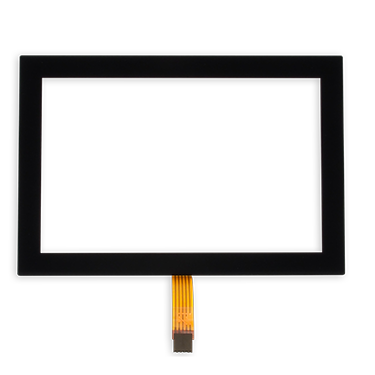
Out Line Dimension , L * W * H (mm)
278.3*216.8* 2.1 mm
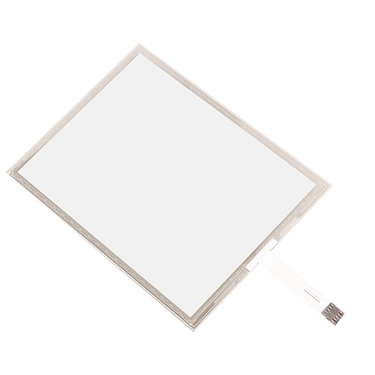
Out Line Dimension , L * W * H (mm)
275.82 * 177.9* 2.1 mm
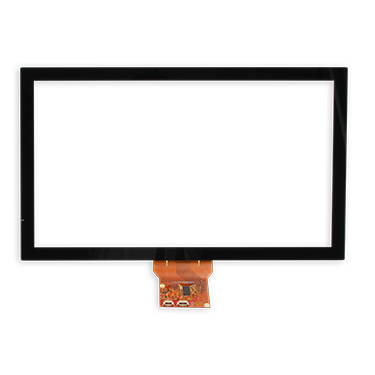
Out Line Dimension , L * W * H (mm)
291.92 * 194.00 * 2.23 mm
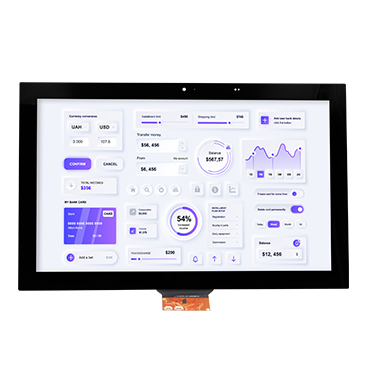
Out Line Dimension , L * W * H (mm)
291.92 * 194.00 * 12.72 mm
EXPLORE PRODUCTS
Higgstec's projected capacitive touch panels deliver smooth and stable touch performance. Additionally, with excellent electromagnetic compatibility, water resistance, sunlight readability, and other advanced specifications, they are ideal for use in various demanding environments, including industrial, rugged, medical, automotive, and marine industries.
Higgstec's 5-wire resistive touch panels offer exceptional reliability and outstanding linear performance using a unique high-temperature manufacturing process. Built on standard 5-wire resistive technology, we also provide customized touch solutions tailored to meet the specific needs of our clients. These highly specialized products are designed to fulfill the requirements of diverse application scenarios, achieving optimal performance.
Integrating 5-wire resistive and projected capacitive touch panels, Higgstec extends its commitment to product quality and technological innovation to touch display modules. To meet the diverse specifications required in various industrial control fields, we provide tailored touch solutions to help clients enhance the added value of their products.