CAPABILITY
NEWS CENTER
APPLICATIONS
SOLUTIONS
SUPPORT
TOUCHPANEL BLOG
CONTACT US
Capacitive Touch Solutions: Advantages and Application Guide
27 Aug. 2025
Capacitive touch technology has fundamentally transformed how we interact with the digital world, delivering seamless and ultra-responsive experiences. In today’s fast-paced tech landscape, this innovation is mission-critical. Unlike traditional touch technologies that require pressure, PCAP leverages capacitance to enable highly precise and sensitive interaction—boosting user engagement and unlocking broad applications from consumer electronics to industrial systems. This article compiles PCAP advantages and size selections, offering practical insights to help you make smart decisions.
PCAP (Projected Capacitive Touch) is an advanced capacitive touch technology that makes interaction with displays more intuitive. Compared with resistive touch that requires physical pressure, PCAP is more sensitive and versatile, delivering unmatched advantages. Its architecture is built on an insulated glass surface overlaid with a conductive grid—commonly ITO—where each intersection forms a capacitive sensor. This generates a continuous electrostatic field; when a finger touches the surface, the field changes instantly, and the controller detects and responds immediately. The design supports multi-touch, allowing simultaneous detection of multiple points for gestures like pinch-to-zoom. Even better, it’s highly sensitive—light touches trigger responses, and performance remains stable and reliable despite scratches or dirt on the screen.
Compared to other touch technologies, PCAP truly stands out. Traditional resistive touch requires pressure, has lower sensitivity, and is prone to wear-related failure; infrared touch, while contactless and based on a light grid, is susceptible to ambient light interference; Surface Acoustic Wave (SAW) is durable and highly moisture-resistant but sensitive to dust. PCAP avoids these pain points, offering a more reliable and flexible solution—becoming the first choice for modern applications.
| Characteristic / Technology | PCAP | Resistive | Infrared | SAW (Surface Acoustic Wave) |
|---|---|---|---|---|
| Touch Sensitivity | Excellent (Light touch) | High (Requires pressure) | Moderate (No contact) | High (Requires cleaning) |
| Multi-touch | Yes | Limited | Yes (Partial) | Yes |
| Durability | High | Moderate | Moderate | High |
| Environmental Resistance | Excellent (Scratch/dust resistant; consider waterproofing) | Excellent | Moderate (Affected by light) | Good (Moisture-resistant but weak against dust) |
| Cost | Mid-High | Low | Moderate | High |
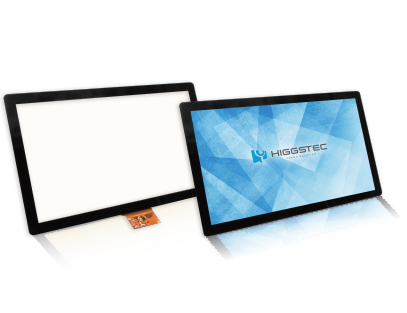
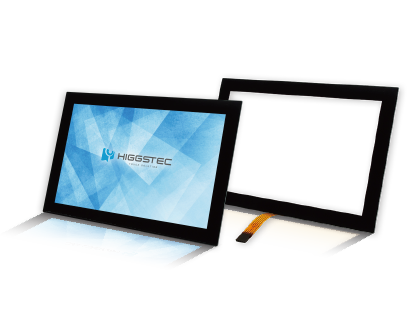
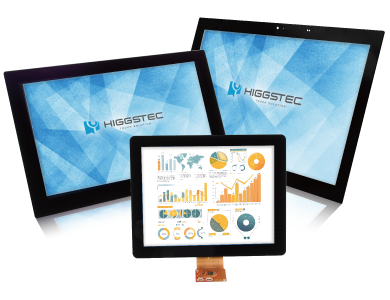
PCAP technology is highly adaptable in real-world applications—from smartphones and tablets to industrial equipment. For instance, Higgstec offers models ranging from 10.4 inches to 23.8 inches to meet diverse requirements. Its strengths lie in advanced capacitive technology, versatile design, and broad cross-industry applicability. Taiwan leads globally in this space, and mastering this technology can give your business a major edge, helping you capture market advantage with ease.
Capacitive touch panel technology elevates device interaction—from phones to industrial displays. Let’s break it down step by step in simple terms.
1. Structure | Multi-layer design, each with a purpose
‧Insulating Layer: A glass or plastic top layer provides the touch surface.
‧Electrode Layer: Two conductive grid layers—horizontal rows and vertical columns—form a sensing matrix.
‧Controller: Monitors signals and pinpoints touch accurately.
2. Capacitance Sensing | Core: Detecting capacitance changes
‧Electrostatic Field: Electrodes establish a field that changes as a finger approaches.
‧Change Detection: The human body conducts; the controller analyzes signals to calculate touch position.
3. Projection Characteristics | Fields extend beyond the surface for flexible sensing
‧Glove & Water Handling: Optimized for seamless operation with thick industrial gloves and maintains high precision even in the presence of moisture or surface water contaminants.
‧Multi-touch: Detects multiple points simultaneously; pinch-to-zoom is easy.
4. Advantages | Elevate the experience
‧Durability: Resists scratches and dirt; suitable for varied environments.
‧Speed: Ultra-fast response for smooth interaction.
‧No Calibration: Stable over time; less hassle.
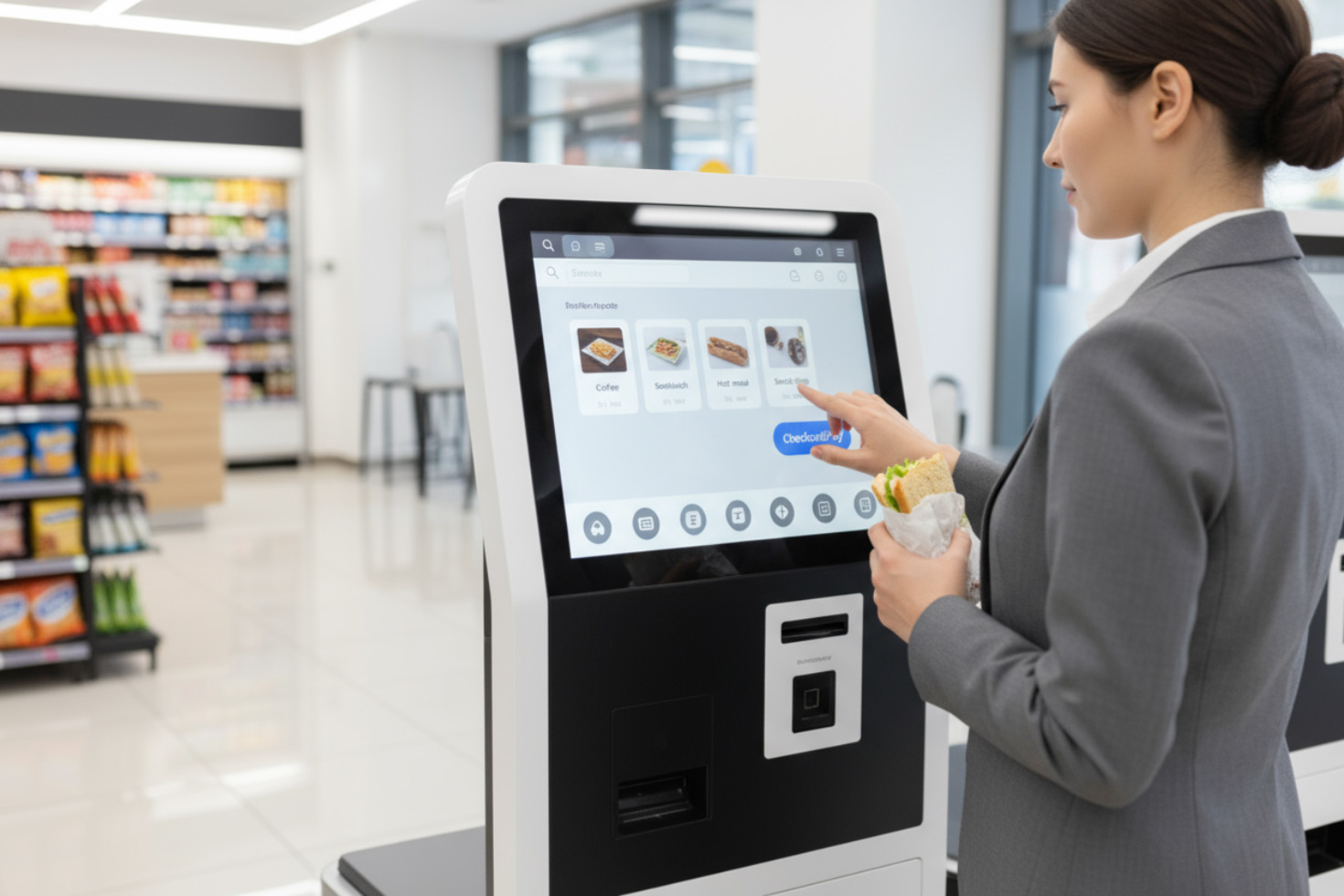
Manufacturing capacitive panels is far more complex than traditional resistive panels, requiring more precise processes and technology, which may extend development timelines. Material usage also raises cost. In high-humidity or wet environments, performance can be affected—so assess usage scenarios carefully. For example:Outdoor information kiosks commonly use capacitive panels. Wanda Optoelectronics also offers durable capacitive panels for harsh environments to easily overcome challenges and capture more opportunities.
PCAP is a winning choice across retail, healthcare, and education—delivering premium interactive experiences. Its capabilities sustain competitive advantage and directly enhance business performance.
Here are the key advantages and technical ratings:
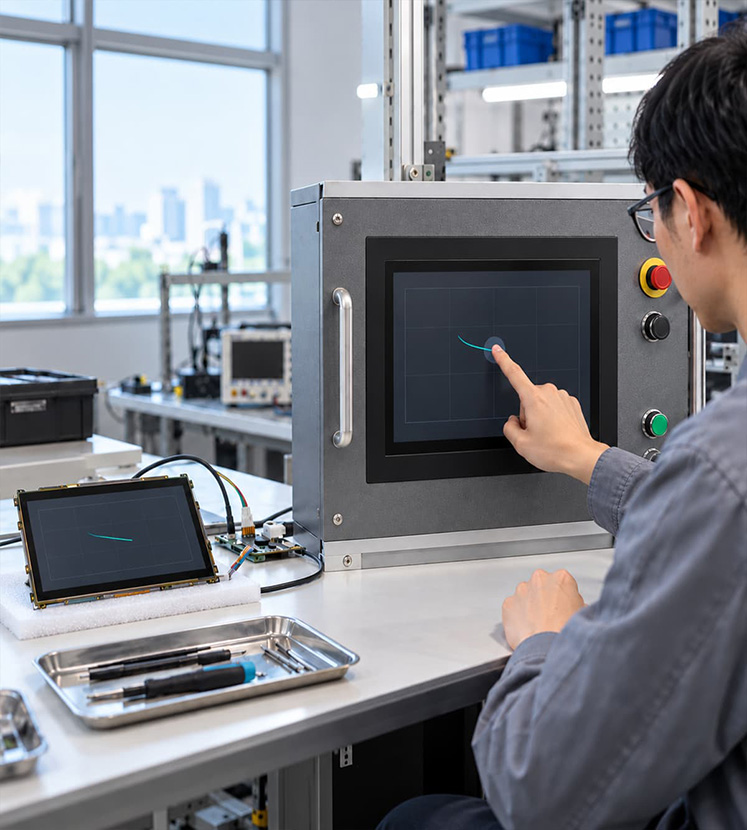
‧High Durability & EMI Shielding | Engineered to withstand harsh environments with superior electromagnetic interference (EMI) protection, ensuring stable touch performance near high-frequency industrial equipment.
‧Multi-touch | Supports advanced gestures—ideal for gaming and retail
‧Fast Response | Real-time feedback—the perfect match for POS systems
‧No Calibration | Lower maintenance costs; highly practical
‧Versatile Integration | Supports curved LCDs
‧Transparent Solutions | Ideal for retail applications
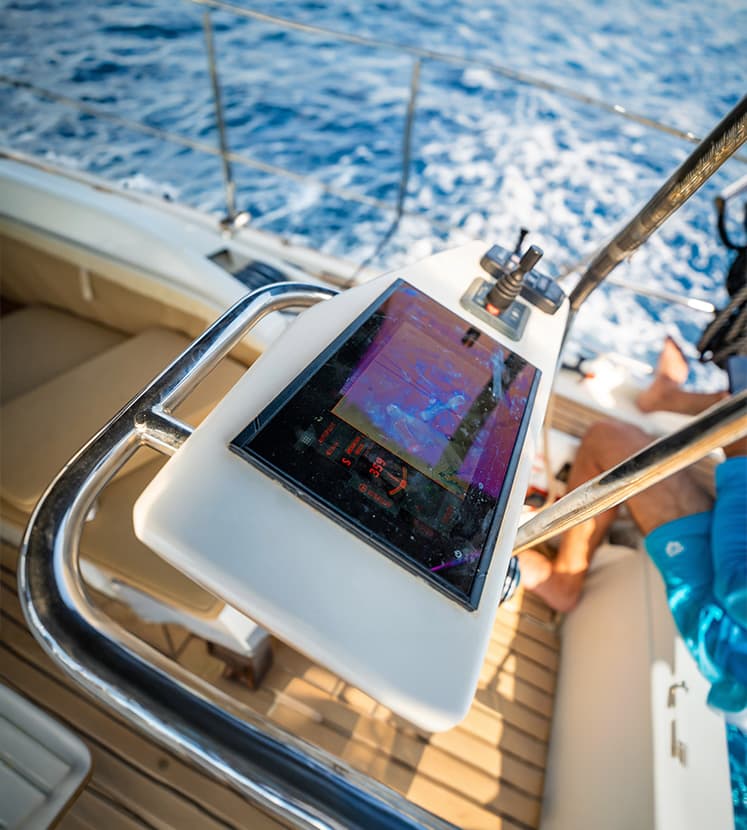
‧Optical Bonding Compatibility | Enhances sunlight readability and durability by eliminating the air gap between the touch panel and LCD, providing superior visual clarity for outdoor and medical displays.
‧Cost-Effectiveness | Higher upfront, excellent long-term value (maintenance savings)
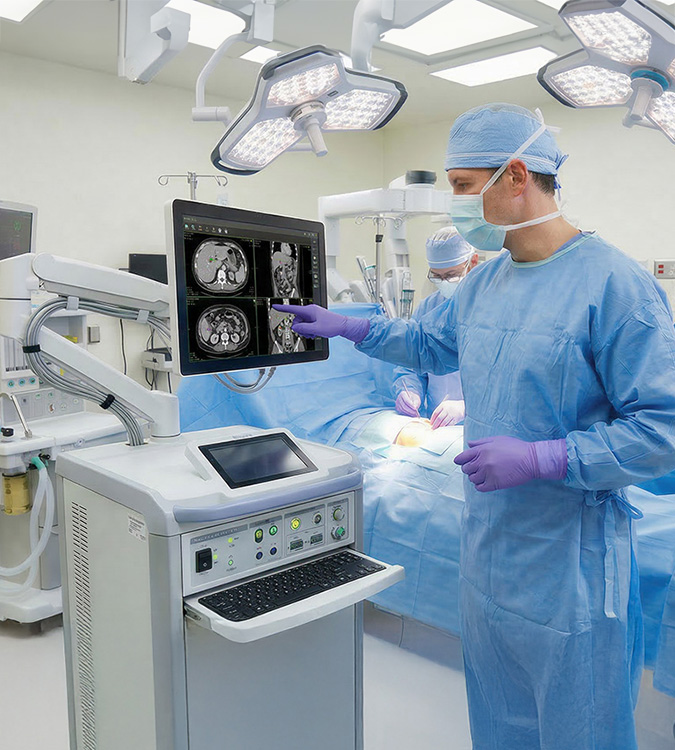
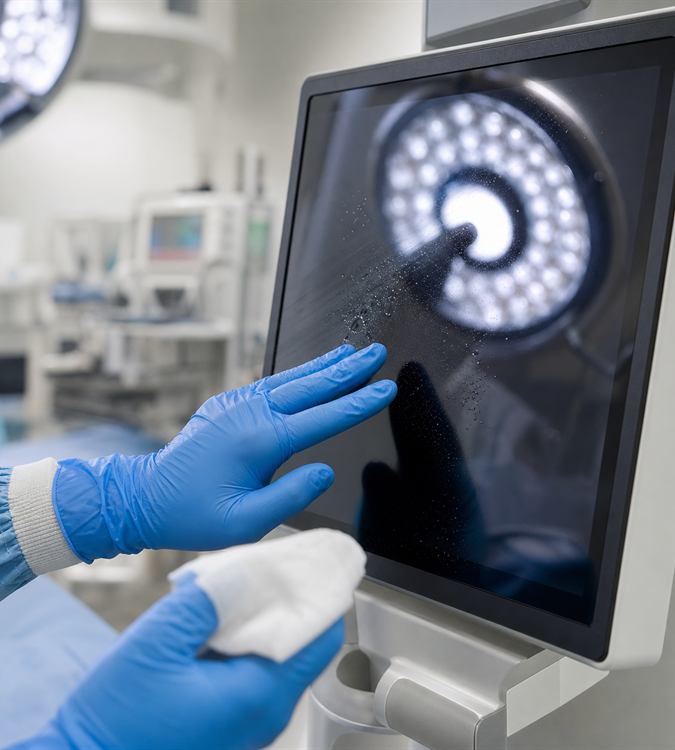
‧Customization | Medical-grade solutions ensure hygiene and meet specific requirements
PCAP screen sizes span broadly—from compact 7-inch handhelds to immersive 98-inch large-format displays—precisely fitting diverse scenarios. This enables you to select the perfect size across consumer electronics, industrial control, retail entertainment, educational signage, and even command centers—enhancing interaction efficiency and delivering immersion. Regardless of project scope, these options balance space, functionality, and user satisfaction for smarter, more practical deployments.
To make sizing clearer, we summarize application trends by ranges. Small sizes (7"–15.6") typically target portable and personal devices—handhelds, tablets, or compact interactive terminals—emphasizing lightness and mobility, ideal for consumer electronics and constrained spaces. Mid-size (19"–32") suits domains balancing space and capability, such as industrial control, interactive displays, or retail entertainment—offering versatility and a larger visual area for durable environments with moderate interaction, improving usability and decision accuracy. Large sizes (43"–98") focus on immersive, group scenarios—education boards, meeting rooms, and entertainment retail—delivering high visibility and expansive views for medium-to-large spaces, enhancing collaboration, communication, and innovative experiences with a futuristic feel.
Related Reading
PCAP vs. Resistive Touch:Industrial,Medical&AutomotiveApplications
| Size | Typical Applications | Advantages |
|---|---|---|
| 7" | Handheld devices | Lightweight and portable—effortless interaction anywhere |
| 10.1" | Tablets, small kiosks | Consumer favorite—intuitive operation and easy to carry |
| 15" | POS, interactive terminals | Space-saving and highly interactive—boosts transaction efficiency |
| 15.6" | Portable embedded | Larger UI and high portability—ideal for mobile use |
| 19" | Industrial, digital signage | Versatile, durable, and reliable—top choice for industrial settings |
| 21.5" | Interactive displays, large kiosks | Balances space and usability—visuals and operation in harmony |
| 27" | Command centers | Larger visual field for more precise, real-time decisions |
| 32" | Retail entertainment | Immersive engagement—drives customer participation |
| 43" | Large signage | High visibility—eye-catching with strong information delivery |
| 49" | Interactive devices | Ideal for medium-to-large spaces—seamless interaction upgrade |
| 50" | Entertainment retail | Enhanced interaction—supports both sales and engagement |
| 55" | Conference room boards | Widely adopted—streamlines team collaboration |
| 65" | Large installations | Group interaction—clear scale advantages |
| 86" | Education and commercial signage | Expansive view—more impactful learning and presentations |
| 98" | Immersive applications | Leading large-format trend—unlimited innovation and a futuristic feel |
Size selection directly affects user experience and functionality—understanding these ranges and details helps you choose the PCAP that perfectly matches your project, balancing usability and design.
The advantages of capacitive touchscreens are clear—and that’s why they’re surging across industries. We’ve broken down fundamentals, unique characteristics, and operating principles—from sensitivity to multi-touch—showing how PCAP outperforms traditional technologies. Durability, speed, and seamless integration underscore its value in the digital era.With a wide range of sizes and options, you can tailor solutions from handheld to large-format displays. Understanding capacitive mechanisms and electrostatic fields reveals the innovation behind it.
If you’re upgrading systems or investing in interactive solutions, PCAP is a winning bet—delivering elevated user experiences with confidence. Explore the options and find the perfect fit. Embrace the touch-first future and let this cutting-edge technology power your applications forward.
PCAP (Projected Capacitive Touch) is a capacitive touch technology that senses finger contact via conductive grids and electrostatic fields. It supports high sensitivity and multi-touch and maintains stable performance even with scratches or dirt on the screen.
PCAP offers high sensitivity, multi-touch, strong durability (scratch/dust resistance), fast response, and no calibration. By contrast, resistive requires pressure and wears out, infrared is affected by ambient light, and SAW is sensitive to dust.
Its core layers include the insulating top layer, conductive grid layers, and a controller. When a finger approaches, the electrostatic field changes; the controller pinpoints the touch instantly and provides real-time feedback. Thanks to field projection, PCAP supports gloved operation and robust multi-touch.
PCAP is widely used in smartphones, tablets, retail POS, industrial control, educational displays, and large signage—ideal for environments that demand high interactivity and durability.
PCAP sizes range from 7 to 98 inches for different use cases:
Although PCAP’s upfront cost is higher, its durability and lack of calibration reduce maintenance. Furthermore, Higgstec provides long lifecycle support and stable supply, which is critical for industrial and medical OEM projects to avoid frequent re-certification.
Looking for Custom Touchscreen or Module Solutions?
Fill Out Our Form to Consult with Higgstec's Experts

10 Sep. 2025

15 Oct. 2025

24 Dec. 2025
11 Mar. 2026
20 May. 2026

30 Jun. 2026
24 Aug. 2026

04 Sep. 2026
07 Oct. 2026
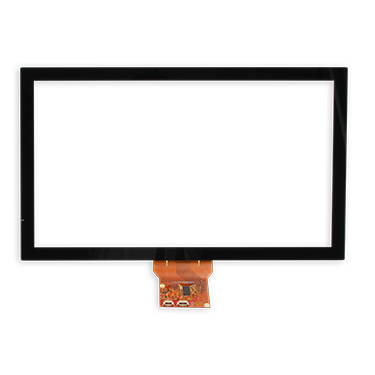
Out Line Dimension , L * W * H (mm)
189.35 * 121.77 * 1.53 mm
Out Line Dimension , L * W * H (mm)
244.66 * 163.3 * 1.53 mm
Out Line Dimension , L * W * H (mm)
291.92 * 194.00 * 2.23 mm
Out Line Dimension , L * W * H (mm)
328.37 * 199.98 * 2.23 mm
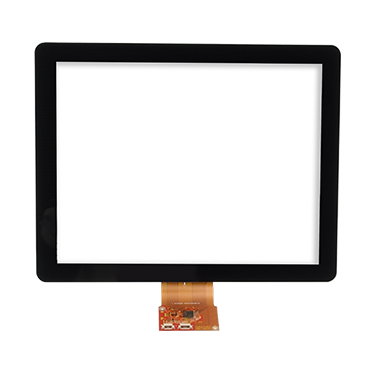
Out Line Dimension , L * W * H (mm)
339.53 * 263.5 * 2.23 mm
Out Line Dimension , L * W * H (mm)
376.54 * 225.9 * 2.23 mm
Out Line Dimension , L * W * H (mm)
375.58 * 308 * 2.23 mm
Out Line Dimension , L * W * H (mm)
444 * 264.6 * 2.23 mm
Out Line Dimension , L * W * H (mm)
409.27 * 334 * 2.23 mm
Out Line Dimension , L * W * H (mm)
511.45 * 302.92 * 3.23 mm
Out Line Dimension , L * W * H (mm)
511.45 * 302.92 * 3.23 mm
EXPLORE PRODUCTS
Higgstec's projected capacitive touch panels deliver smooth and stable touch performance. Additionally, with excellent electromagnetic compatibility, water resistance, sunlight readability, and other advanced specifications, they are ideal for use in various demanding environments, including industrial, rugged, medical, automotive, and marine industries.
Higgstec's 5-wire resistive touch panels offer exceptional reliability and outstanding linear performance using a unique high-temperature manufacturing process. Built on standard 5-wire resistive technology, we also provide customized touch solutions tailored to meet the specific needs of our clients. These highly specialized products are designed to fulfill the requirements of diverse application scenarios, achieving optimal performance.
Integrating 5-wire resistive and projected capacitive touch panels, Higgstec extends its commitment to product quality and technological innovation to touch display modules. To meet the diverse specifications required in various industrial control fields, we provide tailored touch solutions to help clients enhance the added value of their products.