CAPABILITY
NEWS CENTER
APPLICATIONS
SOLUTIONS
SUPPORT
TOUCHPANEL BLOG
CONTACT US
Medical Touchscreen Hygiene Design Guide: IP65 Waterproofing and Antimicrobial Surface Solutions
06 May. 2026
When developing cutting-edge medical devices, your team pours its energy into improving display performance, touch responsiveness, and system integration. But one hidden design flaw can quietly threaten your product, your customers, and even patients’ lives: infection-control design in the touchscreen panel.
This guide breaks down a complete infection-control system for medical touch panels:
Shocking data from the front lines
Start with data from the U.S. Centers for Disease Control and Prevention (CDC):
On any given day, 1 in 31 hospitalized patients in U.S. hospitals is battling a healthcare-associated infection (HAI).
Breaking it down:
Annually: 1.7 million people suffer from HAIs
Annually: 99,000 deaths result
Daily: Over 270 families are shattered by preventable infections
For detailed data, refer to the CDC Healthcare-Associated Infections (HAI) report
Behind these staggering numbers is a shared transmission vector: high-touch surfaces. And your product—
Even after routine disinfection, high-touch surfaces such as bed rails, workstations, and touchscreens remain breeding grounds for dangerous pathogens.
An NIH systematic review goes further:
Touchscreens in medical environments are commonly contaminated with microorganisms and act as “fomites,” silently forming cross-infection chains between healthcare workers and patients.
These studies highlight touchscreens as hidden infection sources in healthcare. For more analysis and data on microbial contamination, see the NIH PMC touchscreen contamination study.
Touch panels on medical equipment are especially difficult to clean thoroughly because of the following characteristics:
| Feature | Risk | Impact |
|---|---|---|
| Extremely high usage frequency | Hundreds of touches per day | Rapid pathogen accumulation |
| Complex user mix | Doctors, nurses, technicians | High cross-contamination risk |
| Structural gaps | Bezels, cable ports, sealed boundaries | Hard-to-disinfect dead zones |
| Optical bonding edges | Liquid seepage prone | Internal contamination buildup |
For hardware engineers and product designers at medical device OEMs, solving infection control is far more complex than selecting antimicrobial glass. It’s a systemic challenge that must be addressed from both structural engineering and materials science:
Structural challenges
Can your touch panel withstand daily sprays and wipes without liquid ingress damage? Does the bezel sealing design truly eliminate every gap where bacteria can hide?
Materials challenges
Can the surface coating retain antimicrobial and optical performance after thousands of chemical wipes? Can bonding and sealing adhesives resist chemical attack from mainstream disinfectants?
These two dimensions are tightly coupled. A touch panel with a premium antimicrobial coating but weak waterproof structure may fail after the first alcohol spray. Likewise, an IP65-rated design without disinfectant-resistant surface materials will not remain stable in real healthcare environments.
This guide is designed to close that critical design-decision gap. We’ll break down a three-layer protection system for medical touchscreen infection control and provide a decision framework you can apply immediately.
Finally, we’ll provide an integrated OEM selection matrix to help you choose the best protection combination by real use scenarios (e.g., operating rooms, ICUs), along with a must-request document checklist for supplier evaluation.
Synergy logic of the three protection layers
Core principle
All three layers are essential, and there is a clear dependency between them. Layer 1 is the foundation—if the sealing structure fails and disinfectant seeps in, any chemical-resistance design becomes meaningless.
Before we dive into structural design, we need to clear up a common selection myth: a higher IP rating is not always better.
Per IEC 60529, the second digit of an IP rating indicates water protection. For medical touch panels, the dust rating typically needs to reach the maximum level 6 (dust-tight), so the key decision is the waterproof level.
| IP Rating | Waterproof test conditions | Typical medical use scenarios | Recommendation |
|---|---|---|---|
| IP65 | Withstands low-pressure water jets from any direction (6.3 L/min, 3 min) | General wards, medical carts, wall-mounted OR displays | ✅ Most practical |
| IP66 | Withstands powerful high-pressure water jets from any direction (12.5 L/min, 3 min) | Rinse-required OR environments, ICUs | ⚠️ Higher cost |
| IP67 | Survives temporary immersion at 1 meter depth (30 min) | Handheld medical devices requiring full immersion cleaning | ❌ More design constraints |
For data, refer to: IEC 60529 International Protection Marking standard
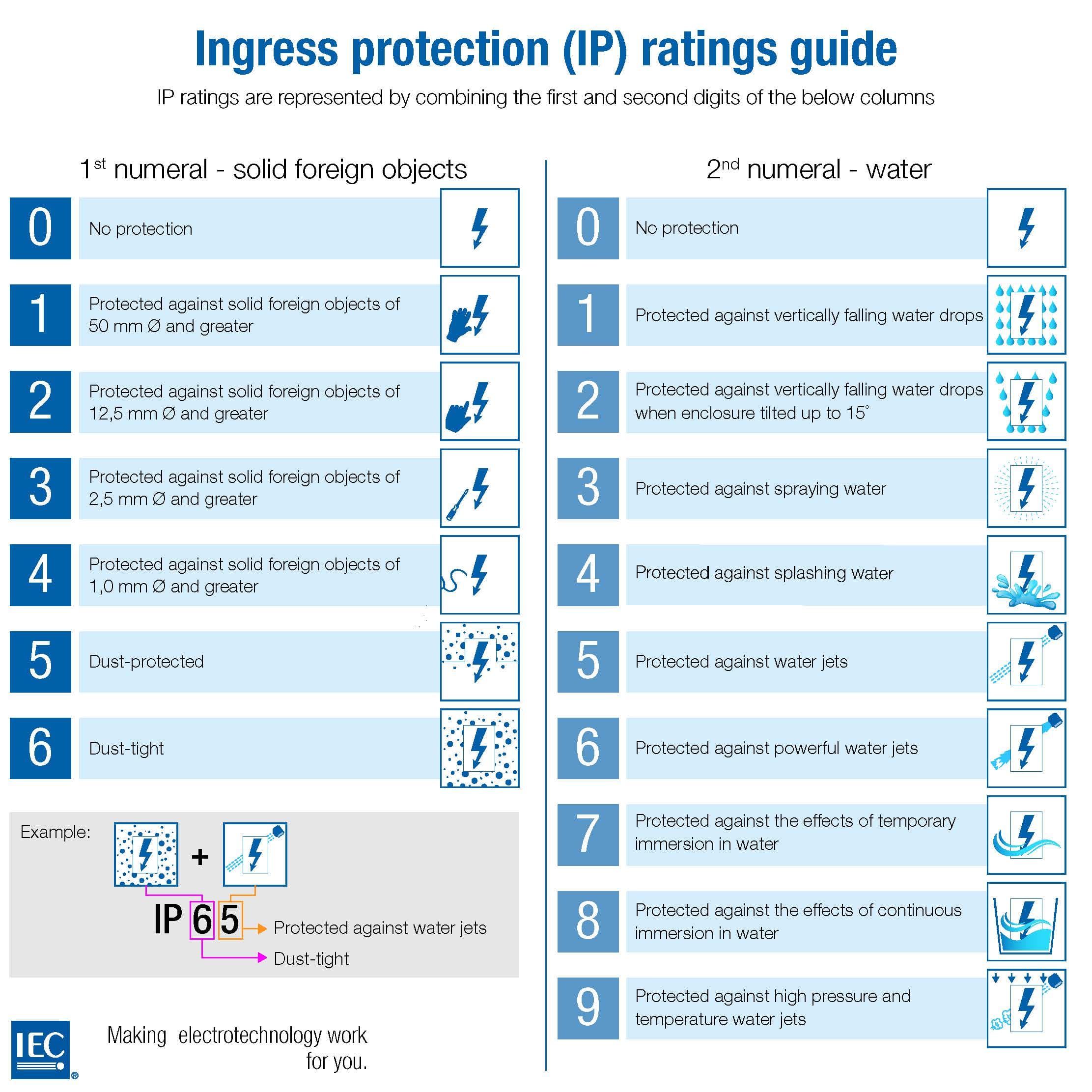
For most fixed or cart-based medical devices, IP65 is the most practical and cost-effective choice. It handles daily disinfectant sprays and wipes while achieving the best balance between design complexity and cost. Unless your device must be immersion-cleaned, blindly aiming for IP67 adds unnecessary cost, thermal challenges, and design constraints.
Your first step should be to define the real cleaning workflow (spray, wipe, or immerse), then work backward to the required IP rating.
This is the critical interface between the bezel and the glass—and also the most leak-prone area. A reliable gasket design must precisely control three parameters:
1. Compression rate
• Ideal range: 20–40% of the gasket’s original thickness (final value depends on material selection)
• Too little compression → seal failure
• Too much compression → accelerated silicone fatigue and degradation
2. Screw spacing
• Bezel screws must be evenly distributed
• Ensure uniform pressure across the entire gasket
• Avoid sealing gaps caused by localized low pressure
3. Material selection
• Use medical-grade or chemical-resistant silicone
• To withstand long-term exposure to disinfectants such as alcohol and quaternary ammonium compounds
• FDA-compliant silicone is a standard choice for medical applications
A touch display module system may not look mechanically complex, but edge gaps between the structure and panel after assembly remain potential liquid-ingress risks—and breeding grounds for bacteria. Rigorous designs require precision edge sealing with adhesive. This process can:
• Effectively prevent liquid from seeping into the optical adhesive layer from the side
• Enhance overall structural rigidity
• Improve long-term waterproof reliability
• Reduce bacterial ingress and growth
This is one of the most common—and most overlooked—failure points in IP65 certification.
The exit point for signal and power cables is the last mile of structural sealing—and often the toughest part.
| Solution | Use case | Advantages | Drawbacks |
|---|---|---|---|
| PG waterproof cable gland | Fixed installations | Stable and reliable, low cost | Non-pluggable |
| IP67-rated waterproof connector | Frequent plug/unplug applications | High flexibility | Higher cost |
| Silicone potting (Potting) | Fixed equipment | Highest sealing reliability | Difficult to service later |
Cable-exit placement may look like a small mechanical-layout detail, but it can have an outsized impact on long-term IP65 reliability.
Problems in the original design
✕ Cable exit located at the bottom of the panel
✕ After spraying, disinfectant flows downward due to gravity
✕ Liquid pools directly around the cable exit
✕ Creates sustained hydrostatic pressure on the sealing structure
✕ Greatly increases long-term leak risk
Optimized solution
✓ Moved the cable exit to the top of the panel
✓ Gravity naturally directs liquids downward
✓ Liquids naturally move away from the vulnerable cable exit
✓ Dramatically reduces stress on the sealing structure
✓ Significantly improves long-term IP65 reliability
Key insight: Great engineering must consider how users operate in real environments—not just theoretical specifications.
In busy wards and corridors, medical devices inevitably collide with carts or equipment. The original intent of a recessed design (where the glass sits slightly below the metal front bezel) is impact protection—but it also brings a highly beneficial side effect for waterproofing.
This small recess forms a drainage channel. When liquid contacts the panel, it is guided to the bezel edge and flows downward, instead of pooling at the joint between the glass and the bezel.
This means:
• The core silicone gasket is exposed to liquid for much less time
• Liquid pressure on the sealing structure is greatly reduced
• The seal lifespan is directly extended
This perfectly demonstrates an excellent design principle:
A good structural design often solves multiple reliability problems that seem unrelated.
In medical touchscreen design, impact resistance and waterproofing are often treated as separate goals—owned by mechanical engineers and reliability engineers, respectively. But the recessed structure clearly shows the importance of cross-functional collaboration.
Touch panels in medical environments undergo repeated chemical exposure every day. Per CDC guidance, four common categories of surface disinfectants act like four different types of “chemical weapons” against your device materials.
As an organic solvent, IPA gradually dissolves the oleophobic coating on the glass surface. This coating prevents fingerprints and ensures smooth touch. Once damaged, the panel becomes prone to oils and becomes difficult to clean. This damage is cumulative—one wipe won’t show it, but hundreds of wipes will.
QAC threatens in two ways. First, it can cause environmental stress cracking (ESC) in plastics (such as bezels) as molecules infiltrate polymer chains and accelerate crack formation. Second, it may seep along the edges of optical adhesives and cause localized delamination.
As a strong oxidizer, it breaks down organic materials (such as optical adhesives) via oxidation, leading to yellowing and reduced adhesion. It can also corrode metal screws and bezels, undermining the physical sealing structure in Layer 1.
High-concentration hydrogen peroxide is also strongly oxidative. Its vapor form (VHP) is especially penetrative, reaching tiny gaps that liquid disinfectants cannot—posing a severe challenge to panels without perfect sealing.
The industry standard approach is repeated wipe testing. This is an accelerated-aging simulation: a lint-free cloth is soaked in a disinfectant at a specified concentration, then wiped across the panel surface back and forth 500 to 1,000 times at fixed pressure and speed—simulating months or years of hospital use.
After testing, you must evaluate carefully:
• Does the surface coating show hazing or peeling?
• Are there signs of delamination or yellowing at optical adhesive edges?
• Does touch sensitivity remain stable?
Physical waterproofing and chemical resistance address your device’s ability to “passively withstand” the cleaning process. Biological protection goes a step further: it actively suppresses bacterial growth on the panel surface between disinfection cycles.
There are currently three mainstream antimicrobial technologies on the market. As an engineer, you should understand their core mechanisms and practical limitations.
| Technology route | Antimicrobial mechanism | Key limitations | Fit for medical scenarios | Cost |
|---|---|---|---|---|
| Silver-ion antimicrobial glass | Continuous release of silver ions disrupts bacterial cell membranes | Higher initial cost | ✓ Top recommendation | $$$ |
| TiO₂ photocatalyst coating | Under light, generates reactive oxygen species that oxidize bacteria | Requires sufficient light to work | ⚠️ Evaluate carefully | $$ |
| AF/AS hydrophobic/oleophobic coating | Lowers surface energy so bacteria are less likely to adhere | No active killing capability | ✓ Recommended as a supplement | $ |
1. Silver ions are integrated directly into the glass substrate during manufacturing.
2. After the glass substrate is formed, a silver-ion antimicrobial layer is added to the surface.
Silver-ion antimicrobial glass is the current gold standard for medical use. Its key advantages include:
✓ In Type 1, silver ions are integrated into the glass during manufacturing. The antimicrobial effect lasts as long as the glass itself and will not wear out or fail due to repeated wiping; however, it is also the higher-cost option among antimicrobial glass solutions.
✓ In Type 2, silver ions are applied as a surface coating. The antimicrobial effect is comparable to Type 1 with a cost advantage; however, if the surface is worn by long-term use or improper abrasion, antimicrobial performance can be affected.
Antimicrobial mechanism
Silver ions are continuously released ➜ Disrupt bacterial cell membranes ➜ Bacteria die
Under light exposure, it generates reactive oxygen radicals that oxidize and destroy bacterial structures.
Long-lasting effect with relatively lower cost.
✕ Nighttime ward environments ➜ performance drops significantly
✕ Inside device cabinets ➜ insufficient light, cannot activate
✕ Dim areas ➜ unreliable antimicrobial performance
Before selection, you must confirm the actual use environment and lighting conditions.
By lowering surface energy, bacteria are less likely to adhere—reducing opportunities for biofilm formation.
Key characteristics
✓ Does not actively kill bacteria by itself
✓ But makes the surface easier to clean
✓ Also provides an anti-fingerprint function
✓ Usually stacked with the first two technologies
How it’s used
Used as a “passive defense” supplement layer, not the primary protection method.
When requesting quotes from touch display module (TDM) suppliers, don’t look only at price. Make sure to request the following documents to verify real capabilities across the three protection layers:
• Third-party IP65 test report (IEC 60529 compliant)
• Full bonding process specification (including adhesive model and edge-sealing materials)
• Drop and vibration test reports (especially for mobile equipment)
• Disinfectant resistance test report (must detail disinfectant types, concentrations, wipe cycles, and applied pressure)
• Cover glass surface coating specifications (especially oleophobic-layer abrasion cycles)
• ISO 22196 antimicrobial test report (clearly stating R values and test strains)
• Proof of antimicrobial glass material sourcing (e.g., Corning 인증 documentation)
• Official statements on antimicrobial durability
• ISO 13485 (medical device quality management system) certification
• Proven medical application case studies and shipment records
For the complete supplier evaluation and technical verification checklist, see: How to Choose a Touch Module Supplier: Avoid 3 Major Purchasing Pitfalls
The core challenge in medical touchscreen design has never been meeting a single specification. It’s integrating physical, chemical, and biological protection into a long-term reliable system. A weak point in any layer can leave a fatal vulnerability when your device enters real healthcare front lines.
For medical projects that require integrating touch sensors, display modules, and full bonding processes, Higgstec has end-to-end experience—from spec discussions and design optimization to sample validation and mass-production delivery. We understand the complexity of these three protection layers and are ready to be your expert partner in building safer, more reliable next-generation medical devices.
Contact our technical team anytime to discuss your project requirements.
Medical touchscreens need an IP65 waterproof design for three core reasons:
• Infection control necessity
Medical environments use multiple disinfectants (IPA, QAC, sodium hypochlorite, etc.) sprayed directly onto panel surfaces every day. An IP65 waterproof structure prevents liquid ingress, avoiding electrical damage and internal contamination buildup.
• HAI prevention
According to CDC data, 1 in 31 hospitalized patients has a healthcare-associated infection (HAI). As a high-touch surface, the touch panel is a key vector for pathogen transmission. A robust waterproof design is the foundational defense of an infection-control system.
• Long-term device reliability
If disinfectants seep into the panel, they can cause optical adhesive delamination and circuit corrosion. An IP65 waterproof structure helps ensure full functionality over a 5–10 year service life, reducing maintenance costs and replacement frequency.
For most fixed or cart-based medical devices, IP65 is the most practical choice. It is sufficient for daily disinfectant sprays and wipes, while achieving the best balance between structural complexity and cost.
While IP67 offers a higher protection level, its sealing requirements for cable exits are extremely strict, and it also adds challenges to touch sensitivity and thermal design.
Recommended approach: Define the real cleaning workflow first (spray, wipe, or immerse), then work backward to the required IP rating—rather than blindly pursuing “higher is better.”
In medical environments, four major disinfectant categories attack via different mechanisms: 70% IPA gradually dissolves the oleophobic coating on the glass surface, with cumulative damage; quaternary ammonium compounds (QAC) cause environmental stress cracking in plastic bezels and may seep along optical adhesive edges and trigger delamination; sodium hypochlorite breaks down organic molecular structures, leading to optical adhesive yellowing and metal corrosion; hydrogen peroxide (VHP) has the strongest penetration, reaching micro-gaps that liquid disinfectants cannot.
A highly resistant material stack typically includes medical-grade silicone gaskets, UV-cured edge sealants, PG waterproof cable glands, and medical-grade optical adhesives (LOCA). For verification, follow repeated wipe tests (500–1,000 cycles at fixed pressure) and evaluate changes in coating integrity and touch sensitivity.
The key difference is reliability versus environmental dependence. Silver-ion antimicrobial glass embeds the antimicrobial component into the glass substrate, so it does not wear out from wiping and does not rely on light. With ISO 22196 certification, inhibition rates can reach 99.9%+. It is well-suited to 24/7 environments such as operating rooms and ICUs. Photocatalyst coatings (TiO₂) may have lower initial cost, but fail in low-light environments; with a coating lifespan of roughly 1–3 years, total cost of ownership can be higher in the long run.
For medical touch panels, silver-ion antimicrobial glass is the more合理 choice.
Supplier evaluation should go beyond price and lead time. Verify capabilities layer by layer across the three protection systems.
Physical protection layer
• Third-party IP65 (or higher) test reports
• Full bonding and edge-sealing process specifications
• Data on structural sealing, waterproof cable exits, and reliability testing
Chemical protection layer
• Disinfectant resistance test reports
• Specifications for surface coatings, optical adhesives, and sealing materials
Biological protection layer
• ISO 22196 antimicrobial test reports
• Proof of sourcing and durability for antimicrobial glass or coatings
Dive Deeper into Medical-Grade Touch Panel Technology
17 Sep. 2025
01 Oct. 2025

28 Oct. 2025

12 Nov. 2025
10 Dec. 2025
04 Feb. 2026
Out Line Dimension , L * W * H (mm)
376.54 * 225.9 * 2.23 mm
Out Line Dimension , L * W * H (mm)
511.45 * 302.92 * 3.23 mm
Out Line Dimension , L * W * H (mm)
258.98 * 161.54 * 6.93 mm
Out Line Dimension , L * W * H (mm)
291.92 * 194.00 * 12.72 mm
Out Line Dimension , L * W * H (mm)
376.54 * 225.9 * 11.8 mm
EXPLORE PRODUCTS
Higgstec's projected capacitive touch panels deliver smooth and stable touch performance. Additionally, with excellent electromagnetic compatibility, water resistance, sunlight readability, and other advanced specifications, they are ideal for use in various demanding environments, including industrial, rugged, medical, automotive, and marine industries.
Higgstec's 5-wire resistive touch panels offer exceptional reliability and outstanding linear performance using a unique high-temperature manufacturing process. Built on standard 5-wire resistive technology, we also provide customized touch solutions tailored to meet the specific needs of our clients. These highly specialized products are designed to fulfill the requirements of diverse application scenarios, achieving optimal performance.
Integrating 5-wire resistive and projected capacitive touch panels, Higgstec extends its commitment to product quality and technological innovation to touch display modules. To meet the diverse specifications required in various industrial control fields, we provide tailored touch solutions to help clients enhance the added value of their products.