CAPABILITY
NEWS CENTER
APPLICATIONS
SOLUTIONS
SUPPORT
TOUCHPANEL BLOG
CONTACT US
18-Inch Medical Touchscreen Module Development: Real-World Strategies for OCA Adhesive Aging, EOL Notices, and Re-Validation Costs
22 Apr. 2026
What Specs Don’t Tell You
”You can easily find a complete selection guide explaining the differences between OCA and LOCA, the three-layer protection strategy behind IP65 sealing, and the value of ISO 13485 certification for medical OEMs. These are all real, valuable, and necessary topics for engineers during the specification decision stage.But some questions never appear in a specification sheet. When a medical device project is delayed by two years, can the touchscreen modules already prepared for the project still be used?
This article is not a technical guide.
It is based on real challenges we have repeatedly encountered in medical touchscreen display module projects — a major medical device manufacturer producing ventilators and anesthesia machines faced a chain reaction of supply chain delays, adhesive aging, technical validation issues, and integration challenges during the rollout of an 18-inch next-generation display interface. How we assessed the risks, structured the proposal, and found a practical solution between engineering requirements and real-world constraints.
If you are currently selecting a touchscreen display module for a medical device, this article covers the answers that specification sheets often leave out.
| Item | What Specs Cover | What Happens in Reality |
|---|---|---|
| Adhesive Technology | OCA vs. LOCA comparison | Adhesive aging after a two-year project delay |
| Sealing Structure | IP65 three-layer protection | Long-term performance under real operating conditions |
| Certification Standards | Meaning of ISO 13485 certification | Supply chain delays affecting certification schedules |
| Technical Guidance | Complete selection framework | Integration challenges between engineering and reality |
Not yet familiar with the technical selection framework for medical touchscreen display modules? We recommend starting with: Medical-Grade Touch Display OEM Selection Guide , then returning to this case study for a more practical, real-world perspective.
This project came from a medical device manufacturer specializing in critical care equipment. Its product lines include invasive and non-invasive ventilators, anesthesia workstations, and neonatal respiratory support systems. These devices are used in hospital ICUs, operating rooms, and emergency departments. Once deployed, they often operate continuously for years in clinical environments. Repair and replacement costs are high, which means supplier expectations go far beyond those of standard industrial applications.
The display interface on ventilators and anesthesia machines directly affects the quality of clinical decision-making. Parameters such as tidal volume, airway pressure, respiratory rate, and anesthetic concentration must be clear, accurate, and visible in real time. In high-pressure medical environments, ambiguity is not acceptable.
Modern high-end ventilators now integrate complex systems such as turbine-driven airflow, dual-gas modules, ultrasonic flow sensing, and CO₂ absorption monitoring. Some models are also designed specifically for neonatal applications. Compared with previous generations, this new generation of equipment introduced several major changes in display interface requirements.
Size Upgrade
The system moved from traditional 10–12 inch displays to an 18-inch large-format integrated interface, allowing multiple sets of parameters to be clearly presented on a single screen.
Healthcare professionals commonly operate equipment while wearing latex or nitrile gloves. Touch sensitivity and false-touch rejection must meet strict requirements.
Long-Term Stability
The device may run continuously 24 hours a day. Thermal stability and long-term reliability are basic requirements for the display module.
ICUs and operating rooms contain many electronic devices operating at the same time. Electromagnetic interference, or EMI, can affect touch signal integrity and must be treated as a real design challenge.
| Equipment Type | Application Environment | Key Requirement | Technical Challenge |
|---|---|---|---|
| Invasive Ventilator | ICU | 24-hour continuous operation | Thermal stability |
| Non-Invasive Ventilator | Emergency Department | Gloved touch operation | Touch sensitivity |
| Anesthesia Workstation | Operating Room | Multi-parameter display | EMI resistance |
| Neonatal Respiratory Support | NICU | Precise parameter monitoring | Display clarity |
The development cycle for this type of equipment is naturally long. Before a new touchscreen display module can enter mass production, it must pass design verification testing (DVT), environmental reliability testing, biocompatibility assessment, and regulatory review. The entire process is usually measured in years. As medical device regulations become increasingly strict, any hardware change may trigger a restart of the certification process. This is why manufacturers are especially cautious when selecting components.
This also defines the supply chain rhythm of medical device projects—long material preparation timelines, relatively low volumes, and uncertain schedules.When that rhythm breaks, the chain reaction can become far more difficult than most people expect.
Explore Higgstec’s complete touchscreen solutions for medical devices: Medical Application Solutions
Optical bonding adhesive aging is one of the most underestimated risks in these projects.
Ventilators and anesthesia machines operate in demanding environments. The device is often enclosed in a sealed housing for long periods, while heat accumulates from both the display itself and the surrounding environment. In actual use, these conditions can be more severe than what a specification sheet suggests. Under these conditions, OCA adhesive may show edge yellowing or fogging earlier than it would in general industrial applications. In consumer electronics, this might be treated as a cosmetic issue. In medical devices, however, display quality directly affects clinical readability. For medical OEMs, this becomes a reliability risk with very low tolerance. As a result, adhesive selection standards, bonding process temperature control, and long-term reliability validation methods all need to be redefined.
Touchscreen module EOL risk
is a particularly difficult issue in medical projects
End-of-life (EOL) notices from upstream display manufacturers rarely align with a customer’s production schedule. In medical devices, replacing a component involves revalidation. Once hardware changes, the testing scope, documentation, and regulatory review may all need to be updated or restarted. This is not simply a matter of finding an alternative part number. The real key is early planning: securing the right material window and preparing alternative solutions before the issue becomes urgent. As an integrated touchscreen display module supplier, the ability to intervene early when EOL signals appear determines whether the customer can keep losses within an acceptable range.
Revalidation costs are often higher than the cost of the component itself, which is why medical device manufacturers do not evaluate touch panel suppliers based only on unit price and lead time. They also care deeply about whether the supplier can consider compatibility and replaceability from the module design stage—so that future hardware changes do not unnecessarily affect the core scope of validation.
When these three issues overlap, the technical discussion becomes much more substantial.
Customers need technical partners who can face these real-world challenges with them, not just suppliers who provide components.
”| Risk Type | Specific Symptom | Impact Level | Resolution Difficulty |
|---|---|---|---|
| Adhesive Aging | OCA edge yellowing, fogging | Affects clinical readability | ⭐⭐⭐⭐ |
| EOL Risk | Upstream supplier discontinuation notice | Triggers revalidation process | ⭐⭐⭐⭐⭐ |
| Validation Cost | Hardware change requires retesting | Increases timeline and cost | ⭐⭐⭐⭐⭐ |
Technical communication with medical device customers is very different from communication in general industrial or consumer electronics projects.
”In standard projects, the process is relatively linear: the supplier proposes a solution, and the customer confirms the specifications. Medical touchscreen module development works differently. Every technical decision is tied to validation responsibility. The customer’s engineering team needs application-specific data and clear failure mode analysis. A vague statement such as “this worked in other projects” is not enough to move the discussion forward.
The questions customers ask are usually data-driven. Under these thermal cycling conditions, what is the expected adhesive lifetime, what are the early signs of failure, and how will the solution be validated? These questions require evidence-based answers. Vague experience-based judgment carries little weight in this environment.
Technical trust is built through the quality of every response.
At this stage, the role of a touch panel supplier is closer to that of a technical consultant. From interpreting display module environmental specifications and recommending optical bonding process parameters to assessing replacement part compatibility, every step requires a substantiated answer. Pushing the question back to the customer and asking them to judge independently only slows the project down.
For Higgstec, this communication process is also an opportunity to clarify the project’s real requirements. The details customers reveal during discussion — actual operating environments, operator habits, and sensitivity to touch response speed — often reflect the real product requirements more accurately than the formal specification sheet. Turning these details into module design inputs is the key to building a solution that can actually be implemented.
| Project Type | Communication Pattern | Decision Basis | Validation Requirement | Responsibility Model |
|---|---|---|---|---|
| General Industrial Project | Linear process | Experience-based judgment | Functional verification | Supplier-led |
| Consumer Electronics | Fast decision-making | Market feedback | Basic testing | Clearly divided |
| Medical Device Project | Iterative confirmation | Concrete data | Complete validation | Shared responsibility |
Medical device operating environments require OCA specifications that differ from those used in general industrial touchscreen modules. The key differences include temperature tolerance, adhesion retention under long-term humid-heat conditions, and long-term edge anti-yellowing performance. These parameters are not always top priorities in consumer electronics material selection. But in continuously operating equipment such as ventilators and anesthesia machines, they directly determine the actual service life of the display module. In this project, Higgstec reassessed adhesive specifications based on the customer’s actual device thermal environment. We also adjusted optical bonding process parameters to ensure stable bonding quality under long-term operating conditions.
Introducing an alternative part number is complex because module interfaces often differ in subtle but important ways. Dimensional tolerances, electrical specifications, backlight configuration differences, and mechanical interface details can all trigger revalidation on the customer side. During the replacement assessment process, Higgstec systematically compared the differences between the original and alternative part numbers. We also reserved compatibility space in the module design so that the impact of hardware changes on the customer’s validation scope could be minimized. In medical device projects, the practical value of this approach is significant: a revalidation process that might otherwise take several months can be compressed into a more controlled and manageable scope.
Touch panel, optical bonding and display moduleintegration is the core capability of Higgstec’s TDM solution. When these three areas are designed and manufactured under a single supplier, the coordination cost of technical decisions is greatly reduced, and the customer’s engineering team only needs to work through one contact window, making issue tracking and responses more efficient.
In real medical touchscreen module development, adhesive selection and module interface specifications often influence each other — OCA thickness and hardness can affect touch sensor signal quality, and backlight configuration changes may also affect optical bonding process parameters. These cross-functional dependencies can easily create gray areas in responsibility under a multi-supplier model—this is where the value of Higgstec’s TDM integration solution becomes clear.
For medical device manufacturers, the communication time and responsibility clarification costs saved during development often carry more practical value than small differences in component unit price.
| Integration Area | Challenge in Split-Supplier Model | TDM Integration Advantage | Quantified Benefit |
|---|---|---|---|
| Technical Coordination | High multi-party communication cost | Single contact window | Communication time reduced by 60% |
| Responsibility Ownership | Many gray areas | Unified accountability | Issue resolution improved by 80% |
| Compatibility Design | Isolated optimization | System-level optimization | Revalidation risk reduced by 70% |
| Supply Chain Management | Decentralized procurement | Centralized management | Lead time accuracy improved by 90% |
How can you identify the most suitable touchscreen module supplier? Start with How to Choose a Touch Module Supplier: Avoid Three Procurement Pitfalls and Find the Right Business Partner . After reading it, you will be better prepared to evaluate the best-fit partner for your project.
Based on the device’s actual thermal environment and operating conditions, Higgstec reassessed the OCA selection criteria. We ultimately confirmed an alternative adhesive that met the medical device requirements for temperature resistance, adhesion retention under humid-heat conditions, and anti-yellowing performance. The optical bonding process parameters were also adjusted during this stage to address the edge yellowing issue from the manufacturing side.
After the revised solution was introduced, the customer’s internal validation process moved forward smoothly. The medical touch panel module ultimately passed validation. This result was meaningful for the customer’s engineering team — they had been blocked at this stage for some time, and passing validation meant the device development schedule could continue moving forward.
The EOL issue was also resolved within the same timeline. After the compatibility assessment was completed, the replacement plan for the touchscreen display module was confirmed to be feasible. The customer’s revalidation scope remained within the expected range and did not trigger a larger design change process.
The complete handling of this project gave the customer a concrete understanding of Higgstec’s technical support capabilities in medical touchscreen modules. It also created a solid foundation for further collaboration discussions.
| Validation Item | Original Issue | Solution | Validation Result |
|---|---|---|---|
| OCA Adhesive | Edge yellowing | Temperature-resistant adhesive + process adjustment | ✓Passed |
| Touch Performance | Gloved operation | Sensor optimization | ✓Passed |
| Part Number Replacement | EOL risk | Compatibility-focused design | ✓Passed |
| Overall Validation | System integration | TDM coordination | ✓Passed |
Ventilators and anesthesia machines operate continuously for long periods. The display module is exposed to heat accumulation, humidity changes, and the effects of a sealed mechanical enclosure. Under these conditions, OCA adhesive may show edge yellowing, fogging, or reduced adhesion earlier than expected. For medical devices, this is not just a cosmetic defect. It is a reliability risk that may affect the quality of clinical readability.
Specification sheets provide basic information such as size, brightness, interface, touch technology, and environmental conditions. However, they cannot fully reflect real usage scenarios. For example: do healthcare workers operate the device while wearing gloves, does the equipment run 24 hours a day, what is the actual internal thermal environment of the enclosure, and is there EMI interference in the operating environment? These factors all affect the final module selection and validation strategy.
Component changes in medical devices often involve revalidation, documentation updates, and regulatory review. Even replacing a display module with a similar specification may require partial retesting because of differences in dimensional tolerances, backlight configuration, electrical interface, or touch performance. As a result, EOL is not only a procurement issue. It is also a project timeline and validation cost issue.
Healthcare professionals in ICUs, operating rooms, and emergency departments usually operate devices while wearing latex, nitrile, or other medical gloves. The touch panel must still detect input accurately through the glove barrier. At the same time, it must prevent false touches caused by moisture, disinfectants, or environmental interference. This places higher requirements on touch IC tuning, sensor design, and panel structure.
TDM integration brings the touch panel, optical bonding, and display module into one supply system. This reduces communication costs and responsibility gray areas between multiple suppliers. For medical device manufacturers, this means: faster issue tracking, more complete compatibility assessment, better flexibility for future replacement part planning, lower risk during design changes, and more efficient coordination during validation.
The key to reducing revalidation risk is to consider long-term supply, replacement part compatibility, adhesive reliability, and interface consistency from the early design stage. A qualified supplier should be able to compare differences between original and replacement part numbers in advance, preserve flexibility in mechanical and electrical design, provide complete test data, support long-term reliability evaluation, and reduce the impact of future hardware changes on regulatory and validation processes. By doing so, future hardware changes can be kept within a more controlled scope.
Facing adhesive aging or EOL challenges in your medical device?
26 Nov. 2025
07 Jan. 2026

21 Jan. 2026
25 Mar. 2026

10 Jun. 2026
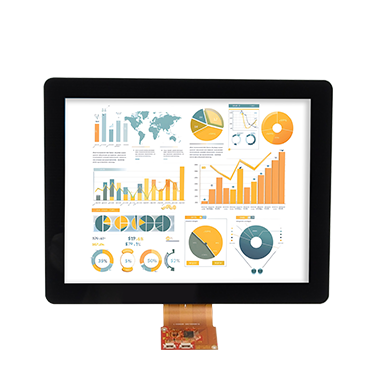
Out Line Dimension , L * W * H (mm)
278.3 * 216.8 * 11.13 mm
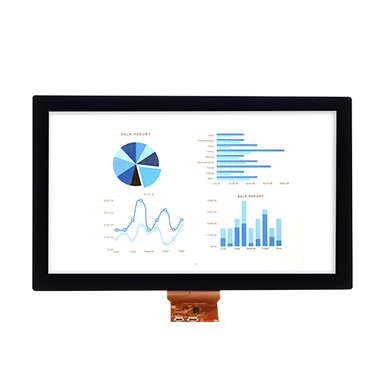
Out Line Dimension , L * W * H (mm)
376.54 * 225.9 * 11.8 mm
Out Line Dimension , L * W * H (mm)
444 * 264.6 * 14.73 mm
EXPLORE PRODUCTS
Higgstec's projected capacitive touch panels deliver smooth and stable touch performance. Additionally, with excellent electromagnetic compatibility, water resistance, sunlight readability, and other advanced specifications, they are ideal for use in various demanding environments, including industrial, rugged, medical, automotive, and marine industries.
Higgstec's 5-wire resistive touch panels offer exceptional reliability and outstanding linear performance using a unique high-temperature manufacturing process. Built on standard 5-wire resistive technology, we also provide customized touch solutions tailored to meet the specific needs of our clients. These highly specialized products are designed to fulfill the requirements of diverse application scenarios, achieving optimal performance.
Integrating 5-wire resistive and projected capacitive touch panels, Higgstec extends its commitment to product quality and technological innovation to touch display modules. To meet the diverse specifications required in various industrial control fields, we provide tailored touch solutions to help clients enhance the added value of their products.