CAPABILITY
NEWS CENTER
APPLICATIONS
SOLUTIONS
SUPPORT
TOUCHPANEL BLOG
CONTACT US
Marine Environments Are the Toughest Test for Marine Touchscreens
20 May. 2026
A commercial fishing vessel works far offshore. Crew members wearing soaked gloves operate the navigation system while salt spray drifts into every seam. On an offshore drilling platform, heavy equipment runs 24/7 and sends constant vibration through steel decks. A superyacht sails the Mediterranean where day-night temperature swings cause repeated condensation on cabin glass.
All these scenarios share one critical point: the marine touchscreen is the only interface between operators and equipment. When it fails, no backup exists.
Unlike factories or hospitals, engineers cannot simply arrive for repairs at sea. Offshore repair costs are often several times higher than onshore, and loss of control at critical moments carries consequences far beyond money. This is why marine touchscreen selection must be more rigorous than standard industrial applications from the very beginning.
Yet many equipment makers and system integrators still apply land-based industrial selection logic. They overlook the three unique and persistent destructive forces in marine environments: salt fog corrosion, vibration and shock, and humidity with condensation. Each failure mode alone can cause premature failure. In marine conditions, all three often occur simultaneously.
This article examines these three failure modes, explains how to prevent them at the design stage, and provides concrete selection guidance for four major marine applications.
Higgstec has accumulated extensive experience across sea, land, and air transportation applications. If you want to understand the full scope first, start with our transportation application overview.
Before analyzing failure modes, one point requires clarification: marine touchscreens are not a single specification. Requirements vary sharply by use case. Selecting without confirming the application often leads to products that appear adequate but fail within a year.
The following four scenarios cover the majority of marine touchscreen demand:
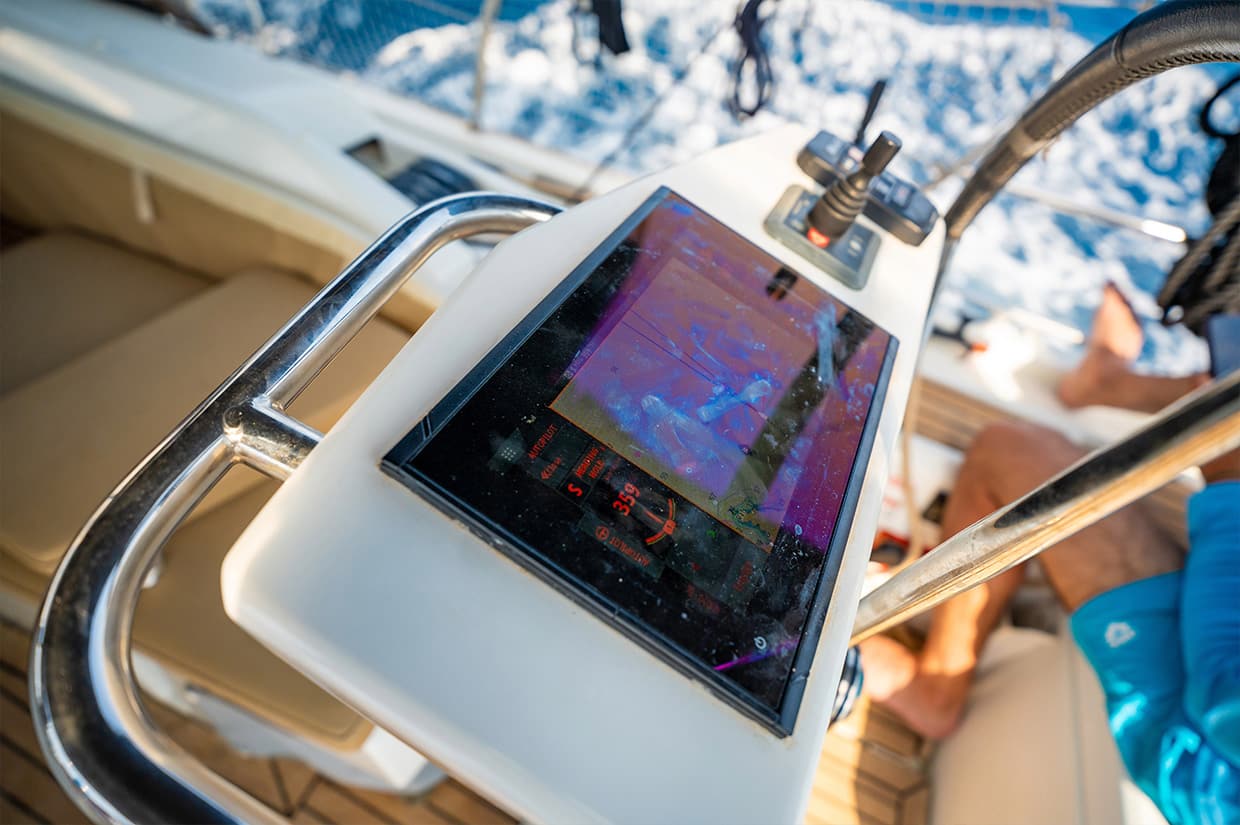
The bridge is the nerve center of the vessel. Marine touchscreens must remain readable in direct sunlight and support precise operation with thick gloves. This application demands the highest standards for high-brightness displays and glove operation , and since it must run 24/7, it also requires exceptional long-term stability of the touch module.
Touch equipment on drilling platforms faces three extreme pressures: continuous mechanical vibration from heavy machinery and salt fog concentration far higher than typical sea conditions, plus harsh working conditions where routine maintenance is nearly impossible. Here, structural durability and maximum service life are the only priorities. Products requiring frequent calibration or replacement offer no practical value.
Fishing vessel environments are extremely wet and rugged. Crew hands are often covered in seawater or fish fluids, and they may operate equipment in wind and rain. The unique challenge here is continuous wet-hand operation combined with relatively limited equipment budgets. Finding the best balance between durability and cost-effectiveness is the core of selection here.
Yacht requirements differ sharply from the first three: aesthetics, design integration, and multi-touch experience often matter more than pure durability. This application typically uses full optical bonding with customized appearance. PCAP multi-touch is the mainstream choice, but the structure still requires marine-grade protection against humidity and salt fog.

Many units perform perfectly in factory tests yet fail before the first annual service at sea. Three destructive forces each follow their own path, but share one outcome: once problems appear, repairs are rarely possible offshore.
Salt fog causes slow but irreversible chemical attack. Chloride ion concentration in marine air is dozens of times higher than typical industrial environments. These invisible salt particles penetrate every tiny seam in the marine touchscreen.
Corrosion Path
Metal bezels usually fail first. Standard aluminum alloy surface oxide layers gradually peel away under continuous salt attack. Connector metal contacts then oxidize, causing unstable signal transmission and delayed or drifting touch response. The deepest damage occurs in the conductive trace layer that forms the core of touch sensing. Once salt erodes these traces over time, touch coordinates shift permanently and eventually fail completely.
Design Solutions
To fight salt fog corrosion, both material selection and sealing structure must be addressed:
Bezel material
316 stainless steel or hard-anodized aluminum offers the most reliable choice. 316 stainless steel resists chloride corrosion far better than 304 and maintains structural integrity in long-term salt fog conditions.
Sealing level
IP65 full-perimeter sealing prevents salt fog from entering through bezel gaps. Some high-spec applications require IP67 for short-term immersion protection.
Waterproof connectors
Connectors are one of the easiest entry points for salt fog. Adding cable strain relief further reduces oxidation risk.
Conformal Coating
Applying salt-fog-resistant conformal coating on PCBs provides a final layer of protection even if trace amounts breach the enclosure.
Touch sensor (Touch sensor)
Sensor trace design and stack-up must protect exposed lines to prevent permanent corrosion caused by gas ingress into the system.
Vibration causes cumulative physical damage. Continuous low-frequency vibration during vessel transit and high-intensity mechanical shock on drilling platforms transmit through the hull to every mounting point.
Failure Mechanism
The most vulnerable area is the bonding layer between the touch module and display—optical bonding (Optical bonding). In vibration environments, this optical adhesive layer often becomes the starting point of damage: repeated vibration causes micro-shifts and loosening, leading to delamination. Eventually, visible bubbles or separation appear between the touch glass and the display, and touch coordinates drift.
Glass corners represent another high-risk zone. Equipment experiences accidental impacts during handling, installation, or daily use. Unreinforced glass develops micro-cracks at corners that rapidly propagate under continuous vibration, eventually causing complete glass fracture.
Design Solutions
RTV structural reinforcement adhesive
This is the most critical choice against vibration failure. In full bonding, selecting the right optical adhesive is essential. Beyond filling the air gap between the touch module and the display, environmental resistance (bond strength, resistance to sunlight) is equally crucial. During module assembly, adding structural reinforcement adhesive (RTV) to further improve rigidity can greatly enhance structural performance, distributing vibration energy evenly instead of concentrating it at the bonding interface.
Chemically strengthened glass
Chemical strengthening forms a compressive stress layer on the glass surface, significantly improving bending strength and overall toughness. This is a basic requirement for marine touchscreens.
How full optical bonding solves durability issues for industrial touchscreens at the structural level is explained in detail in this article. If you want to dive deeper into the technical details of OCA bonding and eliminating the air gap, this is a great follow-up read. 👉 Six Major Challenges of Industrial Touch Displays and Optical Bonding Solutions
If your equipment must operate long-term in high-vibration environments, Higgstec’s impact-resistant glass design solution provides concrete structural specifications and selection guidance. 👉 Impact-Resistant Glass Solution
Humidity is the most common yet most easily overlooked failure mode during selection. Relative humidity on vessels often stays above 80%. Night-time cooling creates temperature differences that cause condensation on glass surfaces. Deck areas remain constantly exposed to moisture.
Failure Mechanism
Air-bonded panels trap moisture in the internal air gap. Temperature changes cause condensation inside the panel, reducing visibility or allowing water droplets to reach the PCB and cause short circuits.
PCAP capacitive touch panels face an additional problem in humid conditions: ghost touches. PCAP detects capacitance changes from fingers, but a water film also alters surface capacitance distribution. When water remains on the glass, the controller misinterprets it as finger contact and generates continuous false signals, disrupting the entire interface. On commercial fishing vessels, wet-hand operation is routine, making this issue especially obvious.
Design Solutions
Full optical bonding eliminates condensation at the source
Removing the air gap eliminates the space where moisture accumulates inside the panel. This is the most direct structural solution to condensation, while also improving display clarity and vibration resistance.
Hydrophobic surface treatment
In addition to firmware optimization, applying a hydrophobic coating on the glass surface reduces water film retention and spreading, lowering the chance of PCAP ghost touches.
PCB moisture potting
Potting the controller and circuit board with moisture-resistant compound protects core electronics even if moisture breaches the enclosure.
5-wire resistive touch – the key advantage
Resistive touch uses physical pressure sensing and remains completely immune to water film, humidity, and even wet gloves. In high-humidity marine environments, this gives 5-wire resistive touch panels a reliability advantage that PCAP cannot easily replace. Touch life reaches 10–35 million actuations, far exceeding typical consumer-grade touch modules.
5-wire resistive touch remains stable under wet-hand and water-film conditions because its sensing mechanism is based on pressure. This article explains the operating principle of resistive touch and fully details its durability advantages in harsh environments—ideal reading before selection. 👉 Why Choose Resistive Touchscreens? A Deep Dive into Durable Design and Cost Effectiveness
After understanding the failure paths of salt fog, vibration, and humidity, the next step is turning this knowledge into concrete procurement decisions. There is no one-size-fits-all specification for marine touchscreens. Below are recommended directions for the four major application scenarios.
| Application | Recommended Touch Technology | Recommended Solution | Core Reason |
|---|---|---|---|
| 🚢 Ship Bridge Navigation Systems | 5-wire resistive touch | IP67 full-perimeter sealing, full optical bonding, 316 stainless steel bezel | Supports thick-glove operation, immune to water-film interference, stable 24/7 operation |
| 🛢️ Offshore Drilling Platforms | 5-wire resistive touch | Full optical bonding, conformal coating, chemically strengthened glass | Resists continuous mechanical vibration, withstands high salt concentration, 10–35 million touch life |
| 🐟 Commercial Fishing Vessels | 5-wire resistive touch | IP65 sealing, hydrophobic surface treatment, PCB moisture potting | Stable sensing in wet environments, low maintenance, cost-effective |
| ⛵ Yachts / Superyachts | PCAP (with humidity-resistant enhanced design) | Full optical bonding, waterproof connectors, firmware water-film suppression tuning | Multi-touch experience and high integration flexibility; requires structural reinforcement for marine environments |
From this table, we can clearly see a pattern.
In 5-wire resistive touch, all voltage-sensing circuitry is located on the bottom glass substrate. The top PET film acts only as a voltage probe to read coordinates when pressed. Even if the surface wears, sensing accuracy remains unaffected. This structural characteristic makes 5-wire resistive touch roughly more than 10× as durable as 4-wire designs in harsh environments. It has long been the preferred choice for high-reliability applications in medical, military, and industrial control—and the same logic fully applies to marine environments.
Choosing PCAP for yachts does not mean marine challenges can be ignored. PCAP’s advantages in design integration and multi-touch experience are real, but it must be paired with full optical bonding, humidity-resistant sealing, and firmware-level water-film suppression tuning to operate reliably at sea. These requirements usually call for deeper specification discussions with the supplier rather than directly adopting standard consumer specifications.
A commercial fishing vessel equipment maker initially selected standard PCAP touch panels for deck control terminals. Units performed perfectly during land-based factory testing. After delivery, disaster struck. Whenever crew members operated with wet hands or waves splashed onto the deck, the interface generated large numbers of ghost touches, causing incorrect commands that severely affected efficiency and safety.
After re-evaluating specifications, the maker switched to 5-wire resistive touch panels with IP65 full-perimeter sealing and hydrophobic surface treatment. In the same wet operating environment, the ghost-touch problem disappeared completely. Whether crew operated with wet hands or seawater splashed directly on the panel, touch response remained stable and accurate. No further water-related operational issues occurred.
This case delivers a powerful lesson.
Spending extra time during selection to confirm environmental conditions and technology match saves far more than weeks of offshore recalls and replacements later.
Marine touchscreen failures are rarely caused by a single factor. While salt fog attacks the bezel, vibration fatigues the bonding layer and humidity quietly accumulates with every temperature cycle. These three destructive forces exist simultaneously in marine environments. Any design oversight in one area can become the weak point of the entire system.
Confirming material specifications, sealing level, and touch technology during selection is far more cost-effective than waiting for a repair team to arrive offshore.
Higgstec has accumulated rich customization experience in marine and transportation touch panels. From specification review and structural design to quality validation, we provide complete technical support. Whether you are evaluating selection direction for a new project or facing reliability issues on existing equipment that require upgrades, contact our technical team directly.
Depending on the application scenario, common certification requirements include: IP65/IP67 dust and water ingress protection ratings (for salt fog and humidity environments), IEC 60945 (marine equipment EMC and environmental test standard), IEC 60068 (environmental testing conditions), and for some high-spec scenarios, classification society certifications such as DNV, BV, and LR. The required certification level should be confirmed based on installation location (cabin/deck) and equipment function—not every application needs the highest level.
The key difference is the sensing mechanism. 5-wire resistive touch uses physical pressure sensing, making it fully immune to water film, humidity, and glove operation. PCAP detects touch by sensing capacitance changes; when water film remains on the surface, it can easily cause ghost touches. In high-humidity scenarios such as commercial fishing vessels and offshore platforms, the reliability advantage of 5-wire resistive touch is clear. For yachts that prioritize appearance and multi-touch, PCAP can be used as long as appropriate marine-grade protection is applied.
Air bonding leaves an air gap between the touch glass and the display. In marine environments, this gap creates two problems: (1) vibration can cause delamination, and (2) humidity can accumulate in the gap and lead to internal fogging. Optical full bonding uses optical adhesive (OCA) to fill the gap and bond the layers into one unit, solving both vibration-related separation and condensation issues while improving display clarity—making it the recommended choice for marine touchscreens.
Touch life is typically evaluated by the number of actuations (taps/presses). 5-wire resistive touch panels usually deliver about 10–35 million actuations, far higher than typical 4-wire resistive designs. Based on the daily operation frequency of ship bridge navigation systems, this lifetime is sufficient to support several years to over a decade of continuous use. By contrast, consumer-grade touch modules are often designed for only about 1–3 million actuations and are not suitable for long-term marine operation.
Early symptoms of salt fog corrosion are often subtle. Common early signs include occasional touch response delays, slight coordinate drift, white powdery oxides on the bezel, and intermittent disconnections caused by unstable connector contact. These symptoms are easily mistaken for software issues or calibration drift. During routine maintenance, it is recommended to inspect bezel sealing integrity and connector contacts to catch corrosion early—before damage spreads to the ITO conductive layer and internal circuitry.

10 Sep. 2025

15 Oct. 2025

27 Aug. 2025

24 Dec. 2025

11 Mar. 2026

30 Jun. 2026

24 Aug. 2026

04 Sep. 2026
07 Oct. 2026
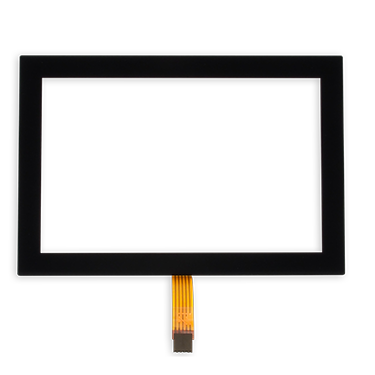
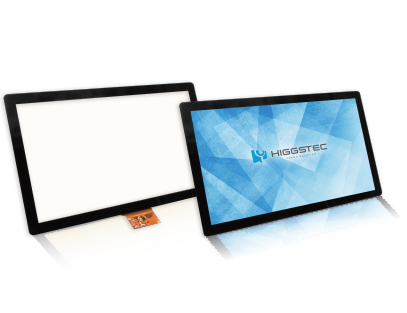
Out Line Dimension , L * W * H (mm)
562.98 *332.4* 3.1 mm
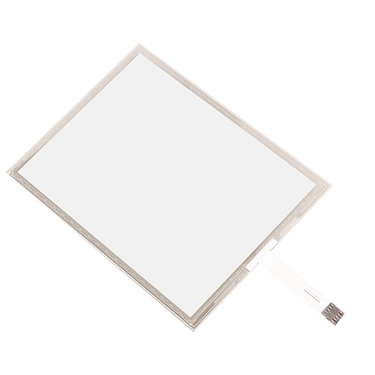
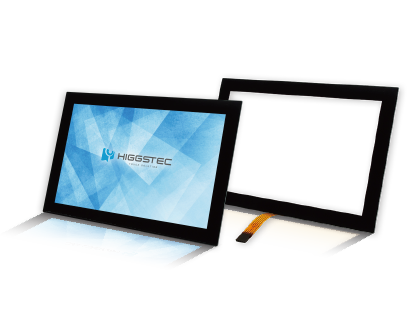
Out Line Dimension , L * W * H (mm)
359.3 * 217.24* 2.1 mm
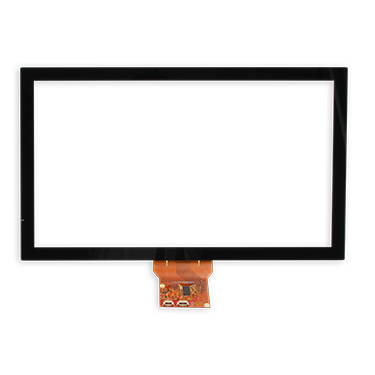
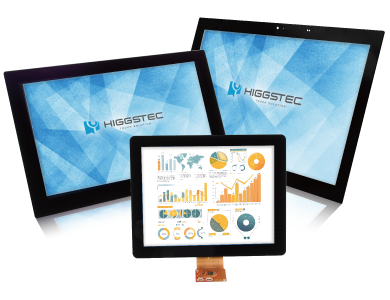
Out Line Dimension , L * W * H (mm)
376.54 * 225.9 * 2.23 mm
Out Line Dimension , L * W * H (mm)
376.54 * 225.9 * 11.8 mm
EXPLORE PRODUCTS
Higgstec's projected capacitive touch panels deliver smooth and stable touch performance. Additionally, with excellent electromagnetic compatibility, water resistance, sunlight readability, and other advanced specifications, they are ideal for use in various demanding environments, including industrial, rugged, medical, automotive, and marine industries.
Higgstec's 5-wire resistive touch panels offer exceptional reliability and outstanding linear performance using a unique high-temperature manufacturing process. Built on standard 5-wire resistive technology, we also provide customized touch solutions tailored to meet the specific needs of our clients. These highly specialized products are designed to fulfill the requirements of diverse application scenarios, achieving optimal performance.
Integrating 5-wire resistive and projected capacitive touch panels, Higgstec extends its commitment to product quality and technological innovation to touch display modules. To meet the diverse specifications required in various industrial control fields, we provide tailored touch solutions to help clients enhance the added value of their products.