CAPABILITY
NEWS CENTER
APPLICATIONS
SOLUTIONS
SUPPORT
TOUCHPANEL BLOG
CONTACT US
Initial Foray into Military Touch Panel Development: A Practical Roadmap from Requirements Definition to Mass Production
26 Nov. 2025
Based on our hands-on field experience, this article walks you through the three most common barriers that first-time entrants to the defense/military market face when developing military-grade touchscreen solutions — along with the proven strategies, tools, and a structured development and delivery methodology you can actually put into practice.
Once you're actually in the arena, you quickly realize that military standards form a densely interconnected matrix. MIL-STD-461 sits at the core, but it must be addressed in parallel with a full range of environmental qualifications — vibration, drop/shock, salt fog, thermal cycling, humidity, dust ingress, and IP-rated sealing. Test conditions must not conflict with one another, and the verification sequence must be engineered deliberately. Discover a misalignment late in the process, and you're looking at costly redesigns.
Solution | The team must map functional requirements to specific regulatory clauses and test protocols from day one — building a compliance matrix that precisely links each application scenario and design parameter to the relevant MIL-STD-461 provisions, creating a fully traceable commitment. Critical parameters should carry built-in design margins: EMI headroom, mechanical tolerances, and optical stack adjustability. The test roadmap must be tightly integrated with the project schedule, making verification a manageable, rhythmic process — not a last-minute black box.
Failure Mode | Inexperienced teams burn the most time and budget here: incomplete specifications, unstable schedules, and forced redesigns after test failures — driving up both cost and cycle time.
On paper, EVT / DVT / PVT looks straightforward. In practice, it's a minefield.
A bottleneck at any one of these gates means schedule slippage and cost overruns. Without a "pre-qualification mindset" — front-loading pre-screening, simulation, and failure tolerance windows — first-time execution carries unacceptable risk.
Solution | Engage laboratory resources early for EMI pre-scans, environmental simulation (thermal cycling, salt fog, humidity), optical measurement, and mechanical pre-qualification. At EVT, conduct pre-scans on critical items to establish failure tolerance zones and correction windows. Implement a test data traceability system (version, batch, conditions, results, conclusions) so every test has full context and audit trail.
For guidance on material selection and EMI/EMC protection decisions, refer to 《Military Touchscreen Decision Guide for Vendors》
Defense programs have long lifecycles, with traceability and change control requirements far more stringent than commercial markets. You will encounter: EOL (End-of-Life) components and cross-regional compliance obligations; alternative component qualification and re-verification; custom BOM version control with strict revision traceability. Customer audits requiring failure analysis, 8D reports, and PCN/ECN notifications — each demanding a verifiable evidence chain.
Solution | Build an alternative component matrix (primary/secondary, equivalent-grade, upgrade/downgrade options) to preserve operational flexibility when EOL events occur. Implement EOL risk monitoring and component lifecycle assessment, ensuring cross-regional compliance. Establish PCN/ECN workflows with defined customer communication checkpoints, so that every change maintains compliance and traceability.
Failure Mode | Without a proactive strategy and system in place, every change event becomes reactive — disrupting delivery rhythm and eroding customer confidence.
Military Standards & Documentation
NPI Cycle Management
Long-Term Supply Management
| Barrier | Specific Challenges | Key Solutions |
|---|---|---|
| Military Standards & Documentation | • MIL-STD-461 interconnected matrix • Vibration / drop / salt fog / thermal cycling tests • Mapping functional requirements to regulatory clauses |
• Build compliance matrix • Incorporate design margins • Develop complete test roadmap |
| NPI Cycle Management | • EVT design feasibility validation • DVT design freeze checkpoint • PVT production stability testing |
• Implement pre-screening mechanisms • Establish failure tolerance zones • Deploy data traceability system |
| Long-Term Supply Management | • Component EOL and cross-regional compliance • Alternative component evaluation and re-qualification • Custom BOM version control |
• Alternative component matrix • EOL risk monitoring • PCN/ECN workflow |
These three barriers are universal prerequisites for any first-time entrant to the defense market: align specifications to standards; front-load and systematize verification; embed long-term supply and change governance into the product lifecycle. Once you clear them, you have a deliverable, repeatable execution playbook.
A European industrial equipment manufacturer decided to enter the defense market, targeting a touchscreen display solution for outdoor, high-EMI environments.
Objectives were clearly defined:
They quickly ran into three blind spots:
No familiarity with the verification roadmap — no MIL-STD-461 compliance blueprint, leading to repeated design iterations
Lack of pre-screening and measurement resources — unable to conduct early-stage critical pre-scans, increasing late-stage rework risk
No experience with long-lifecycle supply management — no alternative component matrix, no strategy for EOL events or cross-regional compliance
Outcome
This is the reality for most teams tackling their first military-grade touchscreen program.
We deconstructed the problem and built the process — three core decisions that brought the program back on track.
• Co-developed a product specification tree — decomposing application scenarios and operational use cases all the way down to compliance-aligned design parameters
• Mapped each parameter to the corresponding regulatory clause, forming a compliance matrix and verification roadmap
• Built in design margins at the specification stage: EMI headroom, optical stack adjustment range, mechanical and sealing redundancy
• Engaged laboratory resources: EMI pre-scan, environmental simulation (thermal cycling, salt fog, humidity), optical measurement, mechanical pre-qualification
• Conducted pre-scans on critical items at EVT to establish failure tolerance zones and correction windows
• Implemented a test data traceability system (version, batch, conditions, results, conclusions) — giving every test full context
| Phase | Primary Objective | Key Verification Items | Risk Control Points | Deliverables |
|---|---|---|---|---|
| EVT | Design feasibility validation | • EMI pre-scan • Optical parameters • Touch performance |
• Pre-screening failures • Parameter drift |
• Design verification report • Critical parameter sign-off |
| DVT | Design freeze verification | • Full military-standard testing • Environmental endurance • Mechanical strength |
• Cascading change effects • Test failures |
• Design freeze documentation • Compliance evidence package |
| PVT | Production stability testing | • Yield statistics • Fixture validation • Line takt time |
• Measurement consistency • Insufficient capacity |
• Mass production readiness report • SOP documentation |
• Built an alternative component matrix (primary/secondary, equivalent-grade, upgrade/downgrade) to preserve EOL flexibility
• Deployed EOL risk monitoring and component lifecycle assessment, with cross-regional compliance coverage
• Established PCN/ECN workflows with defined customer communication checkpoints, maintaining compliance and traceability through every change event
Driven by these three decisions, the customer completed the full development cycle — design freeze, verification pass, stable mass production. Most importantly, they secured their first production orders and established a credible foothold in the defense market.
Military-grade products cannot be iterated on the fly. Requirements definition, compliance mapping, and the test roadmap must all be locked in at program launch. The more complete the planning, the fewer iterations, the shorter the cycle, and the lower the risk.
Introduce pre-screening and simulation early to catch EMI, optical, mechanical, and environmental issues before they compound. Replace late-stage rework with early-stage micro-corrections — maximum stability at minimum cost.
Once a military-grade touchscreen is deployed, it follows the customer's platform for 10, 15 years. Component EOL events, specification changes, cross-regional compliance requirements — they will all come knocking. Without an alternative component matrix, EOL monitoring, and revision traceability, you're permanently in reactive mode.
Building military-grade capability from scratch internally is expensive, slow, and high-risk. Partnering with a supplier that has proven defense experience — and outsourcing compliance, verification, measurement, and supply chain management — is faster, more reliable, and more cost-effective.
Front-Loaded Planning
Suggested Priority: 🔥🔥🔥Front-Loaded Verification Capability
Suggested Priority: 🔥🔥🔥Long-Term Supply Management
Suggested Priority: 🔥🔥Right Partner Selection
Suggested Priority: 🔥🔥🔥These takeaways apply not only to defense, but equally to aerospace, medical devices, industrial automation, and any high-barrier, high-compliance market. The underlying logic is consistent; the methodology is transferable.
There are no one-time lucky breaks in the defense market. The compliance matrix from your first program, the EVT pre-scan data, the alternative component matrix, the PCN/ECN workflow — these aren't just deliverables. They are the foundation for every program that follows. Solidify the process, and the next program costs you three fewer years of hard lessons. Build the data depth, and experience becomes your accelerator.
Our role is clear: from requirements definition and compliance matrix to design freeze; through EVT/DVT/PVT pre-screening and verification; through to mass production stability, EOL monitoring, alternative component matrix, and PCN/ECN workflow management — a proven methodology that makes your first program traceable, auditable, and built to last.
If you're standing at the door of the defense market: align your specifications to standards, front-load your verification, stabilize your supply chain, and choose the right partner. Leave the rest to process, data, and a system that holds up under customer audit.
We're ready. When you are, let's turn high barriers into high competitive walls — so your product doesn't just pass qualification, it earns a lasting position in the defense market.
The primary challenges are the complexity of the military standards documentation system, the long NPI development and verification cycle, and the stringent requirements for long-term supply management and change control. Mishandling any of these leads to extended timelines, cost overruns, and missed market windows.
Build a compliance matrix that precisely maps functional requirements to the relevant regulatory clauses, and incorporate design margins (EMI headroom, mechanical tolerances). Develop a complete test roadmap tightly integrated with the project schedule to prevent rework caused by out-of-sequence testing.
The NPI cycle consists of EVT (engineering feasibility), DVT (design freeze verification), and PVT (production stability testing). Risk reduction hinges on front-loading pre-screening mechanisms, establishing failure tolerance zones, and implementing a data traceability system so issues at each phase are resolved quickly without cascading downstream.
Build an alternative component matrix, deploy EOL risk monitoring and component lifecycle assessment with cross-regional compliance coverage, and implement PCN/ECN change management workflows with defined customer communication checkpoints to maintain compliance and supply continuity through every change event.
Through rigorous requirements clarification and front-loaded design support — building a product specification tree and establishing a compliance matrix and test roadmap. Engage laboratory resources early for EMI pre-scanning, environmental simulation, and optical measurement, so verification is a structured design dialogue rather than a black-box final hurdle.
Choose a partner with proven military-grade experience who can provide end-to-end support — from compliance and verification to measurement and supply chain management. The right partner accelerates compliance matrix development, introduces pre-screening processes, and manages long-term supply risk, serving as both a program accelerator and a stability anchor.
Higgstec Military Touchscreen — Complete Consultation Program
Let our expert team help you make the first time repeatable.

07 Jan. 2026

21 Jan. 2026

25 Mar. 2026

22 Apr. 2026

10 Jun. 2026
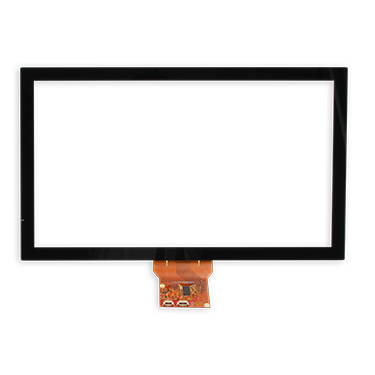
Out Line Dimension , L * W * H (mm)
376.54 * 225.9 * 2.23 mm
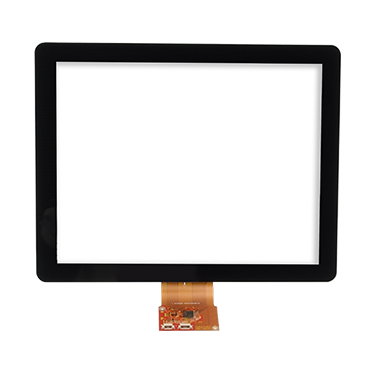
Out Line Dimension , L * W * H (mm)
375.58 * 308 * 2.23 mm
Out Line Dimension , L * W * H (mm)
444 * 264.6 * 2.23 mm
Out Line Dimension , L * W * H (mm)
511.45 * 302.92 * 3.23 mm
EXPLORE PRODUCTS
Higgstec's projected capacitive touch panels deliver smooth and stable touch performance. Additionally, with excellent electromagnetic compatibility, water resistance, sunlight readability, and other advanced specifications, they are ideal for use in various demanding environments, including industrial, rugged, medical, automotive, and marine industries.
Higgstec's 5-wire resistive touch panels offer exceptional reliability and outstanding linear performance using a unique high-temperature manufacturing process. Built on standard 5-wire resistive technology, we also provide customized touch solutions tailored to meet the specific needs of our clients. These highly specialized products are designed to fulfill the requirements of diverse application scenarios, achieving optimal performance.
Integrating 5-wire resistive and projected capacitive touch panels, Higgstec extends its commitment to product quality and technological innovation to touch display modules. To meet the diverse specifications required in various industrial control fields, we provide tailored touch solutions to help clients enhance the added value of their products.