CAPABILITY
NEWS CENTER
APPLICATIONS
SOLUTIONS
SUPPORT
TOUCHPANEL BLOG
CONTACT US
Military Touchscreen Vendor Decision Guide | Tech, Materials & Testing Standards
10 Dec. 2025
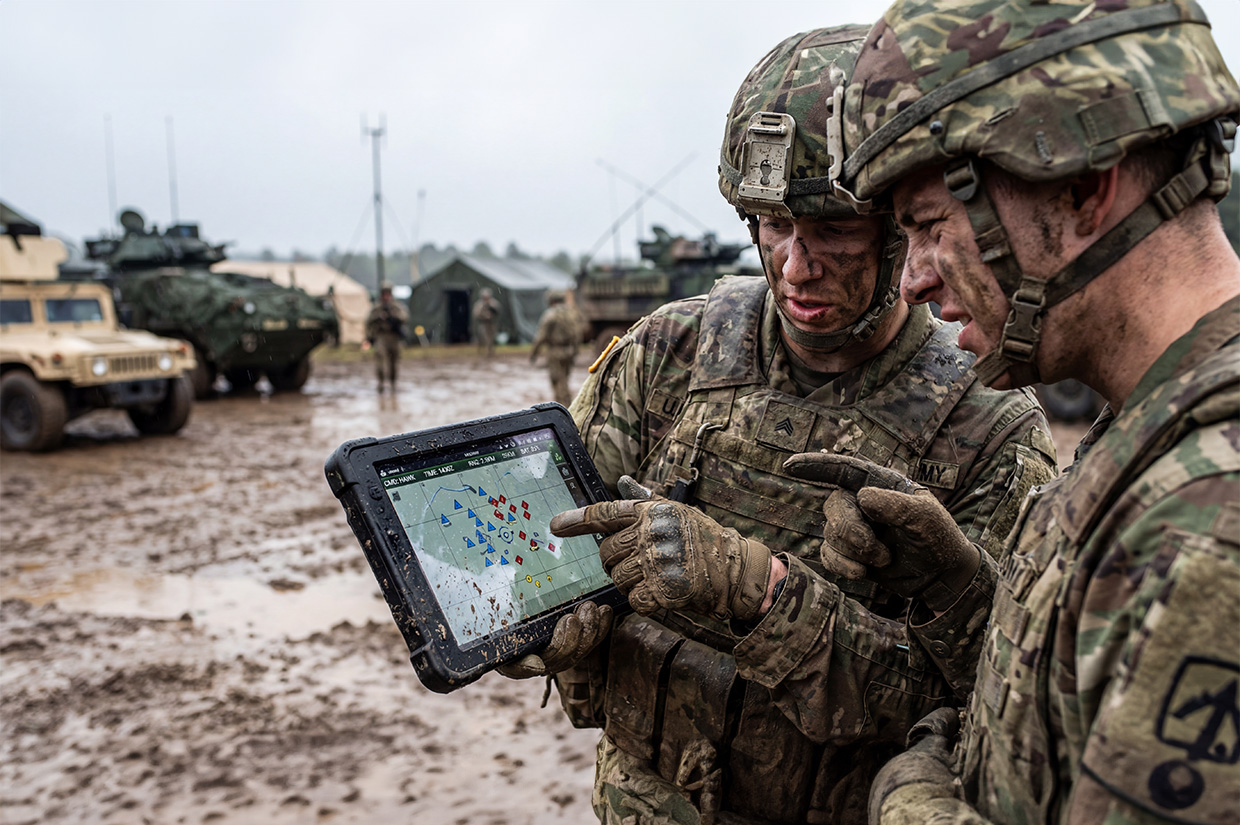
When discussing military-grade touch panels, many people think of rugged specs like scratch resistance and shatter resistance. But the true trials on the battlefield are far more complex. It’s a systemic challenge across materials science, structural design, electromagnetic compatibility, and firmware algorithms. Any seemingly robust hardware spec must be validated within the strict frameworks of MIL-STD-810H (environmental engineering) and MIL-STD-461G (EMI/EMC), using concrete test methods, procedures, and pass criteria.
Our core strengths
Extensive industrial design experience, robust mass-production processes, precision optical bonding techniques, and comprehensive test capabilities together build a fully transparent and auditable chain of specifications and evidence.
Everything starts with the right choices in structure and materials. For the front cover of military touch panels, we select cover glass from 0.7–10.0 mm per specification requirements, and use mechanical design to strike the best balance of strength and weight.Even more important is surface treatment. The precise stack of AG (anti-glare), AR (anti-reflection), and AF (anti-fouling) coatings directly determines sunlight readability, fingerprint residue after touch, and cleaning ease.
Let’s return to measurable, practical indicators:
Using a spectrophotometer to control transmittance, haze, and reflectance ranges; using front cover surface compressive stress and depth of layer (CS/DOL) to describe crack resistance. If the customer specifies drop-ball or IK protection levels, the fixtures and pass criteria are clearly defined in the spec. All of this is quantifiable with HiggsTec’s existing test equipment and recorded for traceability.
Front cover material and surface treatment specifications
| Item | Specification | Test Method | HiggsTec Capability |
|---|---|---|---|
| Front cover thickness | 0.7–10.0 mm | Drop-ball test (IK x) | ✓ |
| Material | Chemical and physical strengthening | CS / DOL / GASP / SCALP | ✓ |
| AG anti-glare | Transmittance control | Spectrophotometer | ✓ |
| AR anti-reflection | Reflectance range | Spectrophotometer | ✓ |
| AF anti-fouling | Surface energy control | Contact angle goniometer | ✓ |
We offer two major technology tracks tailored to different deployment scenarios.
Supports G+G or G+F+F stacks, enabling multi-touch, fine gestures, and an excellent touch experience. In military scenarios with gloves, wet hands, and raindrops, firmware strategies become critical.
Naturally strong in oily, humid, and noisy EM environments. HiggsTec’s 5-wire resistive adopts high-temperature sintering (near 500°C) on ITO glass, providing superior long-term linearity and wide-temperature stability.
Combines PCAP-like multi-touch with RTP-grade robustness against harsh conditions, meeting most application needs.
How to choose? Our recommendations
| Technology type | Projected capacitive (PCAP) | 5-wire resistive (RTP) | Analog matrix resistive (AMR) |
|---|---|---|---|
| Stack options | G+G / G+F+F | High-temperature sintered ITO glass | F+G / F+F+G |
| User interaction | Smooth multi-touch, fine gestures | Accurate single-touch | Multi-touch, fine gestures |
| Best-fit scenarios | Precision graphical UI interfaces | Extremely harsh environments (oil, water, electromagnetic interference) |
Suitable for both of the above |
| Interference resilience | Glove/wet-hand operation requires deep firmware optimization | Intrinsic resistance to oil/moisture/noise | Suitable for both of the above |
| Temperature stability | Good | Excellent (thanks to ~500°C sintering) |
Good |
| EM resilience | Certain specs achievable via special shielding and filtering design | Intrinsic advantage | Intrinsic advantage |
➡︎ For reference, see related articles on military-grade touchscreen development experience
Optical bonding: precise trade-offs among clarity, durability, and serviceability
OCA (film adhesive), OCR (liquid adhesive), and Air Gap (frame bonding with an air layer) each trade off sunlight readability, reflectance, shock resistance, and repairability differently. Military outdoor deployments commonly use high-brightness LCDs (1000–1500 nits) paired with AR/AG and full bonding to reduce surface reflection and improve contrast. Under salt fog, thermal cycles, and UV exposure, however, optical interfaces may yellow, blister, or age at the adhesion boundaries.
HiggsTec’s advantage lies in our diverse bonding processes and materials library. We design validation conditions per Method 509.6 (salt fog) and thermal cycling/humidity (Method 501.7/502.7/507.6), first conducting material- and module-level pre-tests, then defining whole-device tests with the customer. In addition, our laser micro-patterning capability (line width 45 μm, pitch 35 μm) provides greater freedom for conductive patterns in narrow-bezel structures and miniaturized module designs—particularly suited to military applications that demand high precision and stability.
| Bonding type | OCA (film) | OCR (liquid) | Air Gap (frame) |
|---|---|---|---|
| Sunlight readability | High | High | Good |
| Reflectance | Low | Low | Medium |
| Shock resistance | Good | High | Medium |
| Serviceability | Hard | Medium | Easy |
| Applicable LCD brightness | 1000–1500 nits | 1000–1500 nits | <1000 nits |
MIL-STD-810H is the most frequently cited standard for environmental testing, with emphasis on clearly defined methods. For each environmental test, we provide explicit method definitions.
High/low temperature operation and storage (Method 501.7/502.7) require defining upper/lower temperature limits, LCD grade, backlight thermal conditions, and power-on state. Humidity (Method 507.6) maps to specific cycles and durations. Salt fog (Method 509.6) involves material selection and anti-corrosion coating strategies. Sand and dust (Method 510.7) tie to sub-module edge sealing, system filters, and venting design. Vibration/shock (Method 514.8/516.8) require mounting strategies, anti-resonance analysis, and fixture definitions.
HiggsTec provides a complete test plan that spells out methods, procedures, categories, fixtures, and pass/fail criteria. Prior to formal third-party reports, internal measurement records serve as preliminary evidence. We also candidly disclose boundary conditions, including size range, front cover thickness, bonding method, controller model, backlight power, and thermal assumptions.
| Test item | Standard method | Test content | HiggsTec capability |
|---|---|---|---|
| High/low temperature | Method 501.7/502.7 | Temperature limits, LCD grade | ✓ |
| Humidity | Method 507.6 | Cycle curve, duration | ✓ |
| Salt fog | Method 509.6 | Material corrosion resistance, coating strategy | ✓ |
| Sand & dust | Method 510.7 | Sealing design, filter/venting | ✓ |
| Vibration/shock | Method 514.8/516.8 | Mounting strategy, anti-resonance | ✓ |
The essence of MIL-STD-461G is whether equipment can operate normally without disturbing other systems in the intended EM environment. For panels and touch modules, common items include CE102 (conducted emissions at power leads), RE102 (radiated emissions), CS114/CS115/CS116 (conducted susceptibility on cables), RS103 (radiated susceptibility), and CS118 (ESD).
At the module design stage, HiggsTec incorporates shielding stack-ups, bezel grounding, FPC routing and filtering topologies, and provides corresponding EMITP (test procedure) drafts, EMITR (report template), and pre-test plans to reduce iterative integration costs at the system level.
Outdoors or in severe weather, droplets and water films, or thick gloves worn by operators, can disrupt touch accuracy. For these issues, projected capacitive (PCAP) can be tuned via firmware algorithms and controller parameters; in certain extreme settings, resistive (RTP) delivers a more stable, reliable experience. Military platforms commonly operate under high vibration and shock; mitigation includes reinforced standoffs, washers, adhesives, and support structures to ensure long-term durability.
True professionalism is not only about what you can do, but about clearly knowing your boundaries. Overpromising is the root cause of project failure.
“Our sub-module provides reliable sealing structures and gasket designs to support your system in achieving IP65/66/67 targets, but the final rating is determined by your complete device tests.” We avoid claiming “our panel is IP65.”
“Our panel can work with your system on shielding and low-emission design to improve overall EMP resilience.” We avoid claiming “EMP-proof panels,” as EMP is a system-level challenge.
Any declaration of passing specific clauses or levels must be based solely on the project’s formal test plan and final test reports.
Method, premise, evidence—this is HiggsTec’s winning formula in defense projects.
A number without its premises and method is meaningless.
Operating 300 hours in sand and dust with only 10% performance degradation—
Under what particulate concentration? What wind speed? What criteria define “degradation”?
Achieving 98.5% touch accuracy under a 100 V/m field—
Across what frequency range? How are touch points defined?
HiggsTec’s core competence is an engineering methodology ingrained in our DNA:
We master high-temperature sintered resistive touch processes, precision laser patterning of conductive structures, and diversified mass-production optical bonding. We speak MIL-STD fluently to reconstruct your validation roadmap.
We operate high-standard cleanrooms and ESD-protected lines, backed by a full suite of reliability measurement and test equipment, and we insist on clearly defining all technical boundary conditions.
Early in the project we provide a reviewable, executable technical commitment and test plan; later, we transition it seamlessly into formal test reports and third-party certificates to close the validation loop.
This is the professional attitude a military-grade touch solution demands—and HiggsTec’s ultimate assurance for steady delivery and long-term customer trust.
Challenges: materials science (scratch, impact, weatherability), structural design (mechanical reliability), EMC (EMI/EMC), firmware algorithms (touch accuracy), and quality control (traceability).
HiggsTec strengths: chemically strengthened aluminosilicate glass, precision bonding, EMI/EMC design aligned with MIL-STD-461G, robust mass production, and comprehensive test capabilities—ensuring product stability and consistency.
Requirements: IK7+ impact conditions as baseline, choose front cover glass via mechanical design, and adopt multilayer AG/AR/AF coatings to improve sunlight readability and durability.
HiggsTec capability: control transmittance, haze, and reflectance using spectrophotometry, and verify crack toughness via compressive stress testing to ensure materials and performance meet targets.
PCAP: Ideal for precise UIs and multi-touch, but requires firmware optimization for gloves, wet hands, or raindrops.
RTP: Best for oily, humid, and high-EMI noise environments. HiggsTec’s high-temperature sintered ITO process ensures excellent long-term stability and durability.
AMR: When the above user interaction needs and harsh conditions coexist, AMR avoids poor user experience.
Impact: Bonding affects sunlight readability, shock resistance, and serviceability. OCA, OCR, and Air Gap each have pros and cons.
HiggsTec: For high-brightness LCDs (1000–1500 nits), we use AR/AG stacks with full bonding to improve contrast and reduce reflection, verified through salt fog and thermal cycling aging tests.
Items: High/low temperature (Method 501.7/502.7), humidity (507.6), salt fog (509.6), sand & dust (510.7), vibration/shock (514.8/516.8).
HiggsTec provides complete test plans, uses internal measurement records as preliminary evidence, and openly discloses boundary conditions to earn customer trust.
Requirements: Incoming material traceability, serial and lot management, PCN/EOL management, and RoHS/REACH declarations.
HiggsTec practice: Certified to ISO 9000, ISO 14001, and TS16949; uses confocal laser microscopy, salt fog testing, and other equipment to generate traceable measurement reports—ensuring quality and documentation integrity.
To learn more about our military display customization solutions,
Our professional team will provide you with the most precise support and service
17 Sep. 2025
01 Oct. 2025

28 Oct. 2025

12 Nov. 2025
04 Feb. 2026

06 May. 2026
22 Sep. 2026
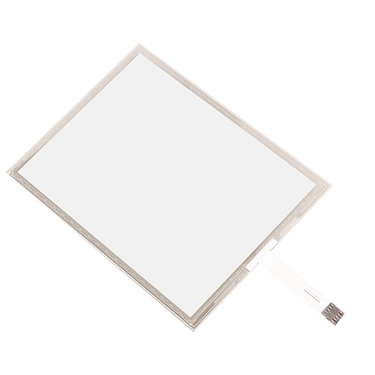
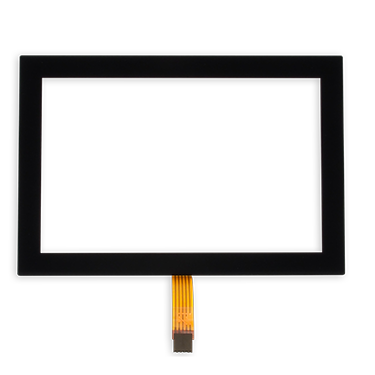
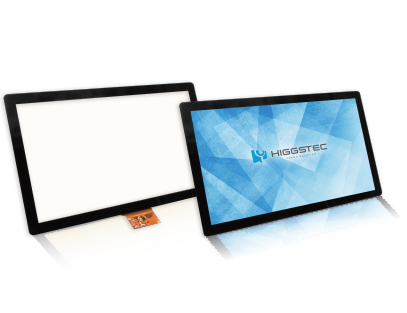
Out Line Dimension , L * W * H (mm)
562.98 *332.4* 3.1 mm
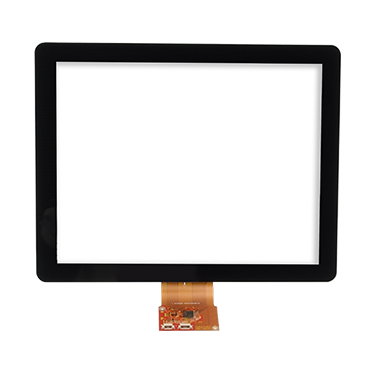
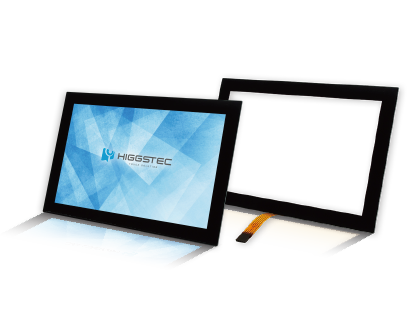
Out Line Dimension , L * W * H (mm)
339.53 * 263.5 * 2.23 mm
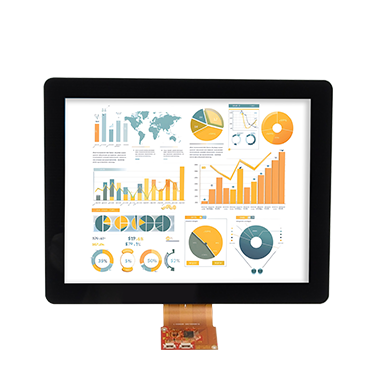
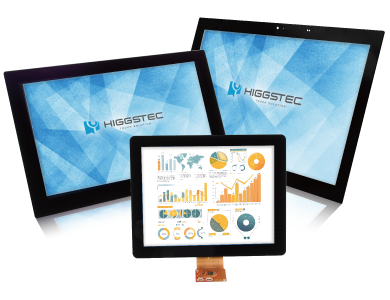
Out Line Dimension , L * W * H (mm)
339.53 * 263.5 * 11.28 mm
EXPLORE PRODUCTS
Higgstec's projected capacitive touch panels deliver smooth and stable touch performance. Additionally, with excellent electromagnetic compatibility, water resistance, sunlight readability, and other advanced specifications, they are ideal for use in various demanding environments, including industrial, rugged, medical, automotive, and marine industries.
Higgstec's 5-wire resistive touch panels offer exceptional reliability and outstanding linear performance using a unique high-temperature manufacturing process. Built on standard 5-wire resistive technology, we also provide customized touch solutions tailored to meet the specific needs of our clients. These highly specialized products are designed to fulfill the requirements of diverse application scenarios, achieving optimal performance.
Integrating 5-wire resistive and projected capacitive touch panels, Higgstec extends its commitment to product quality and technological innovation to touch display modules. To meet the diverse specifications required in various industrial control fields, we provide tailored touch solutions to help clients enhance the added value of their products.