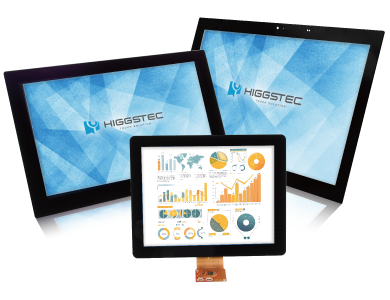
Sensing Technology Breakthroughs
Exceeding conventional touch limits – engineered for demanding environments

In medical, industrial, and outdoor applications, touch system failures introduce real operational risk. Higgstec applies rigorous engineering to deliver solutions backed by real-world validation. We continuously advance three critical dimensions—sensor reliability, operational precision, and optical visibility—all rooted in actual field challenges. Choose Higgstec: a touch partner that performs consistently under the most demanding conditions.
Exceeding conventional touch limits – engineered for demanding environments
Limitations of Conventional Resistive Touch Panels
Traditional single-layer resistive panels face three persistent issues: complete failure when the sensing layer is damaged, inability to detect pressure differences, and lack of EMI protection. A single touch failure can cause equipment downtime and safety risks, with repair and lost-production costs quickly escalating.
Higgstec Double-Layer Resistive Touch Solution
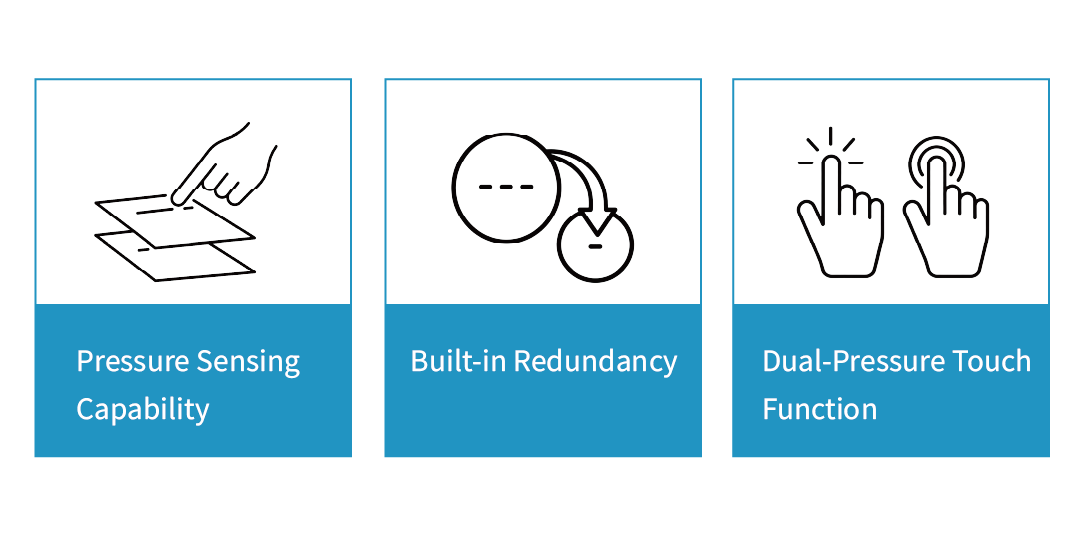
Higgstec’s double-layer resistive architecture uses two independent sensing layers, each with its own FPC tail and controller. If one layer fails, the second layer instantly takes over, keeping the system operational.
The design integrates pressure sensing, built-in redundancy, dual-pressure touch, full waterproofing, and EMI resistance. Optional multi-touch support enables advanced gestures for complex HMI requirements.
Limitations of Single-Mode Capacitive and Resistive Touch
Single-technology solutions often require compromises. PCAP delivers smooth operation but is prone to false touches from conductive liquids such as blood or saline. RTP resists liquids and supports stylus/glove input but lacks light-touch sensitivity.
Higgstec Hybrid Dual Touch Solution
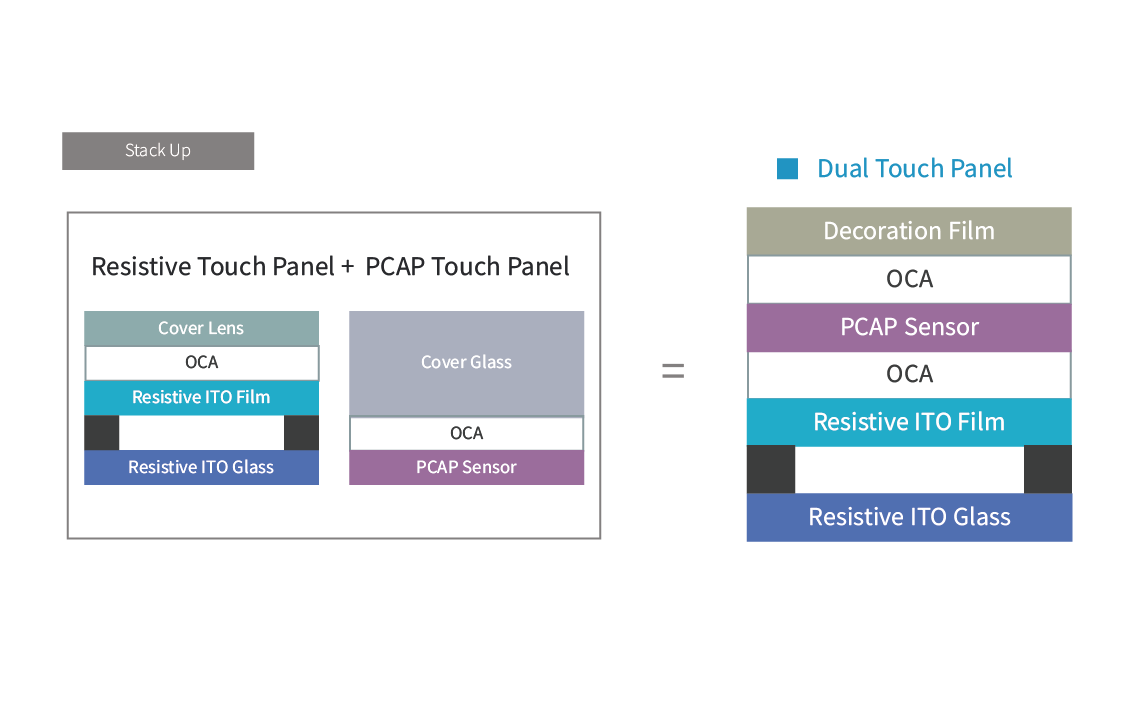
Higgstec Hybrid Dual Touch integrates PCAP and RTP sensing layers on a single panel with independent controllers that switch automatically. PCAP handles everyday fluent input; when conductive liquid or stylus operation is detected, RTP takes over. The architecture is inherently immune to capacitive EMI, ensuring uninterrupted performance.
Limitations of Conventional Segment Displays
Conventional segment displays lack built-in touch capability. Adding touch requires an extra sensing layer, increasing thickness, cost, and integration complexity.
Higgstec TiSD Solution
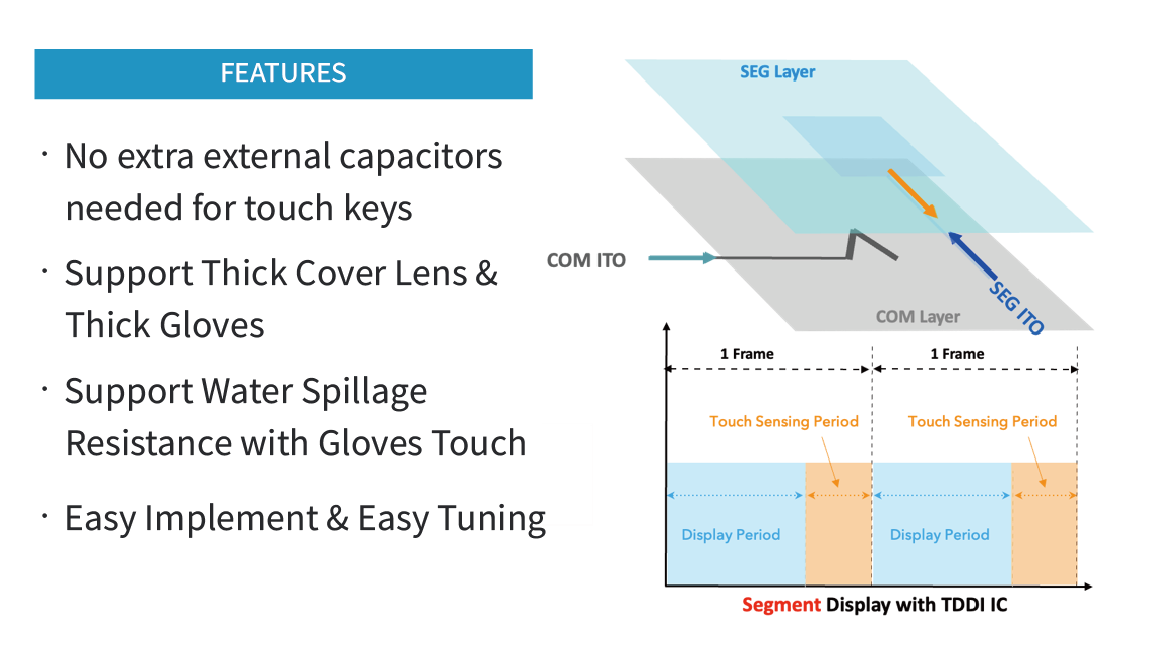
Higgstec TiSD enables touch sensing directly on the existing SEG/COM ITO layers of segment displays—no additional sensor required. It supports thick cover glass, thick-glove operation, and water resistance. Up to 24 touch keys are supported with SPI/I²C interfaces, significantly reducing integration cost and complexity.
Beyond buttons and touch – creating more intuitive human-machine dialogue
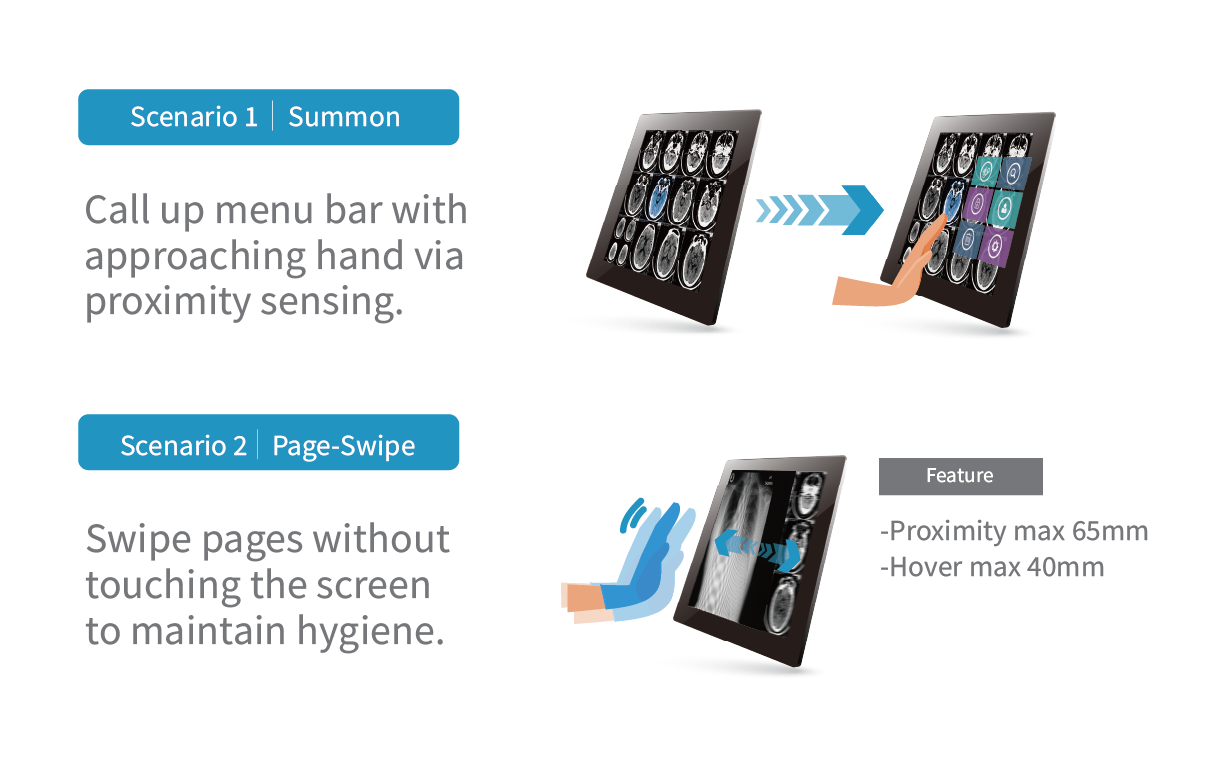
Hygiene and Usability Limitations of Conventional Touch
In medical and food-processing environments, direct screen contact risks cross-contamination. Gloved hands or occupied hands often fail to register input, compromising efficiency and safety.
Higgstec Hover / Proximity Touch Solution
Higgstec proximity sensing enables contact-free operation: proximity detection wakes the menu at up to 65 mm; hover detection enables page turning at up to 40 mm. No surface contact is required, maintaining hygiene while improving intuitive interaction.
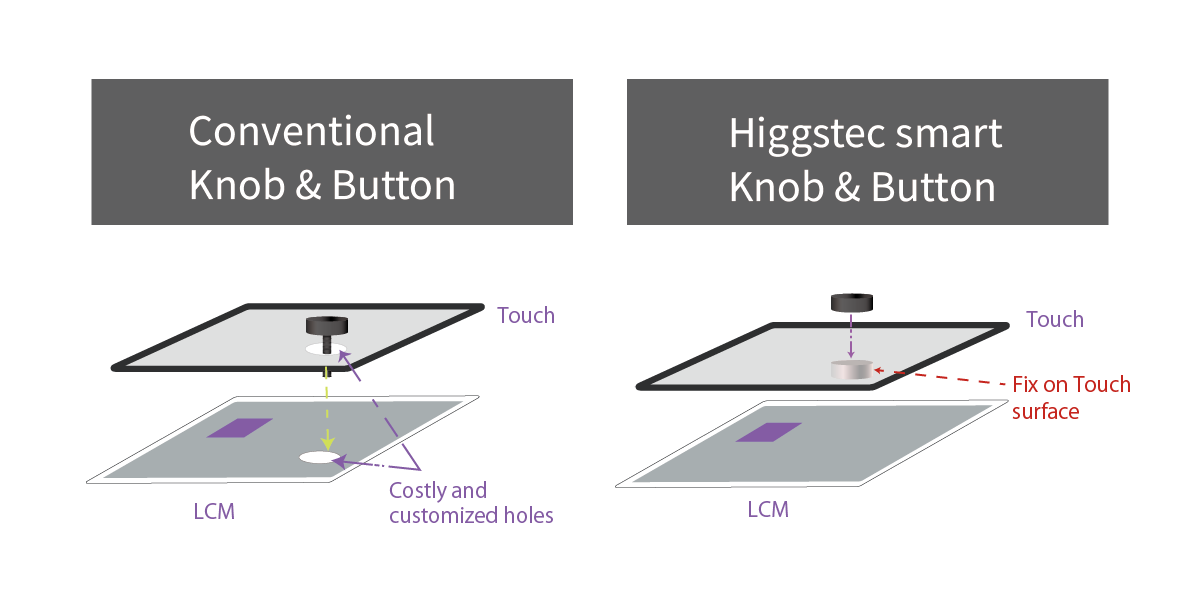
Integration Limitations of Conventional Knobs and Buttons
Traditional knobs and buttons require drilled holes, increasing structural complexity and cost while leaving non-sensing areas that degrade the user experience.
Higgstec Smart Knob Solution
Higgstec smart knobs mount directly on the touch surface without holes. Both active and passive knob designs are supported, delivering rotation, press-down, and mechanical detent feedback. The sensing area automatically rejects false touches for conflict-free operation.
Breaking visual limits – making the display no longer the bottleneck
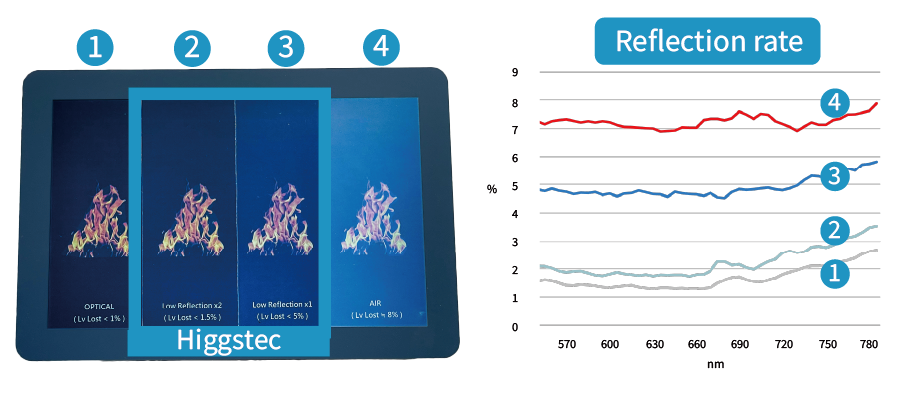
Display Challenges of Conventional Air-Gap Bonding
Air-gap bonding offers high yield and Mura-free advantages, yet high interface reflectance significantly reduces clarity under bright ambient light, impairing operator readability.
Higgstec RC Low-Reflectance Solution
Single- or dual-layer optical treatment dramatically lowers reflectance without full optical bonding. Image clarity approaches that of optical bonding while retaining the high yield and Mura-free benefits of air-gap assembly.
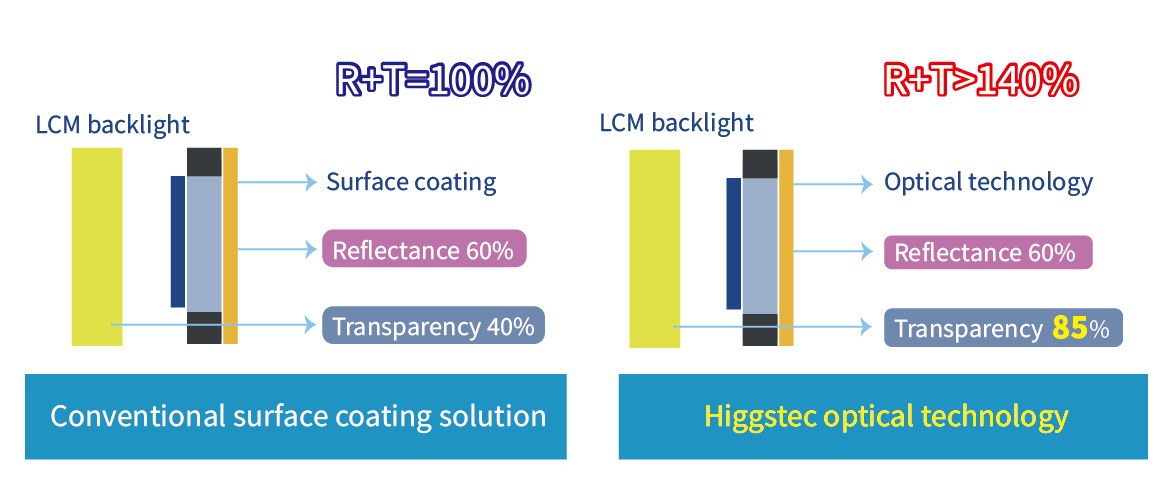
Limitations of Conventional Mirror Coatings
Conventional mirror coatings are constrained by optical physics: reflectance + transmittance cannot exceed 100 %. When the display is off, mirror performance is poor and application scenarios are limited.
Higgstec Optical Technology Breakthrough
Traditional mirror coatings trade transmittance for reflectance. Higgstec’s solution maintains strong mirror reflection while preserving—and even improving—transmittance, allowing T% + R% to exceed 100 %. When the display is off, the surface functions as a true mirror. Ideal for rear-view mirrors, fitting rooms, exhibition displays, and other dual-function applications.
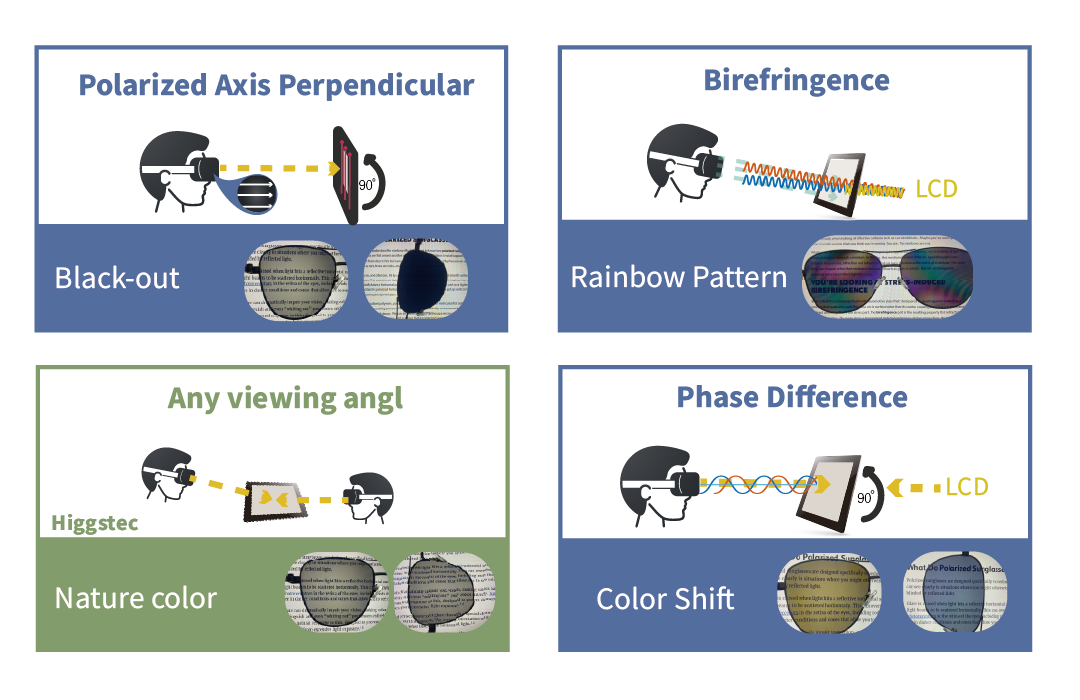
Outdoor Visual Pain Points
Viewing screens while wearing polarized sunglasses often results in complete blackout, color shift, or rainbow patterns—especially noticeable at different viewing angles—severely degrading outdoor usability.
Higgstec PSR Technology Solution
Optical phase-compensation design eliminates birefringence and phase-difference artifacts. Natural color and clear images are maintained at any angle, even with polarized sunglasses—ideal for marine navigation, outdoor vehicles, and other high-ambient-light applications.
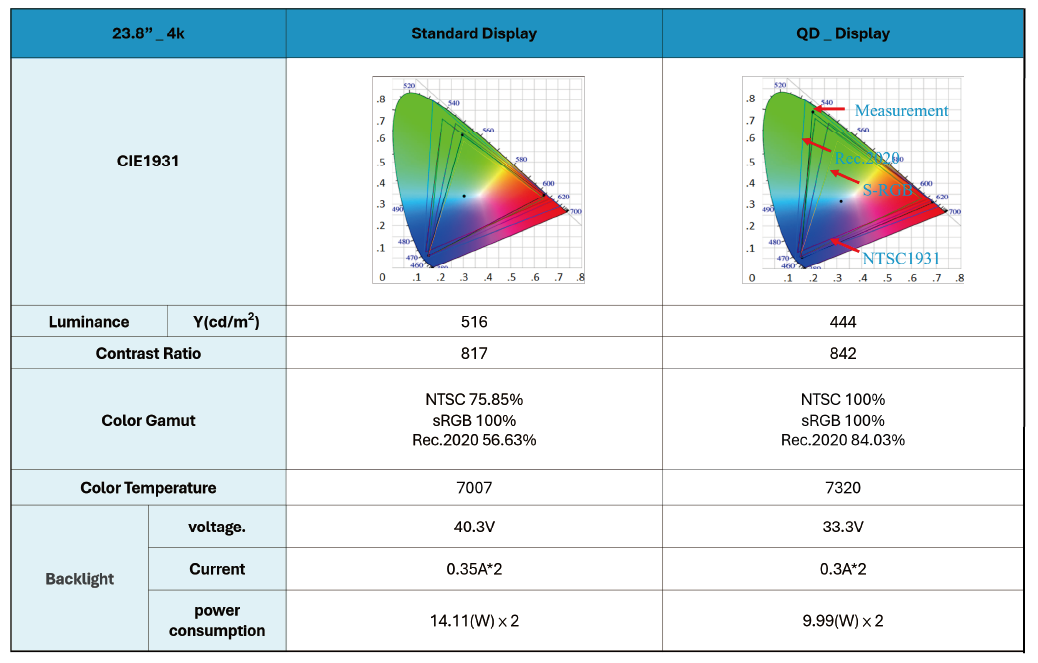
Color-Gamut Limitations of Conventional Displays
Conventional LED backlights suffer from uneven R/G/B spectral intensity, resulting in narrow color gamut and limited color performance.
Higgstec QD Display Solution
Quantum-dot technology expands color gamut from NTSC 75.85 % to NTSC 100 % (Rec.2020 coverage 84.03 %) while reducing backlight power from 14.11 W to 9.99 W. Contrast and lifetime are simultaneously improved—ideal for medical and professional high-color-accuracy applications.
Download the complete technical documentation to learn how Higgstec touch solutions perform in the most demanding environments.
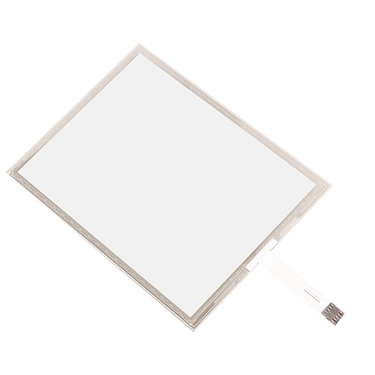
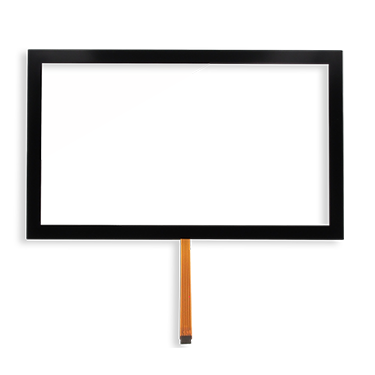
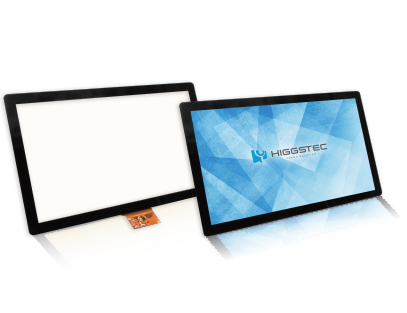
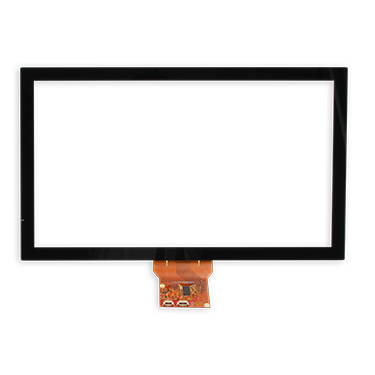
Out Line Dimension , L * W * H (mm)
258.98 *161.54* 1.4 mm
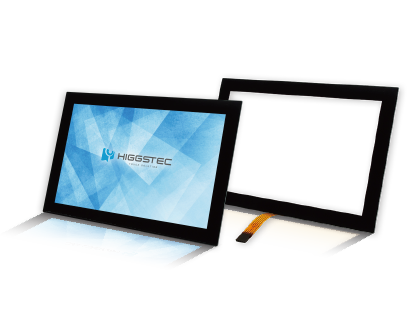
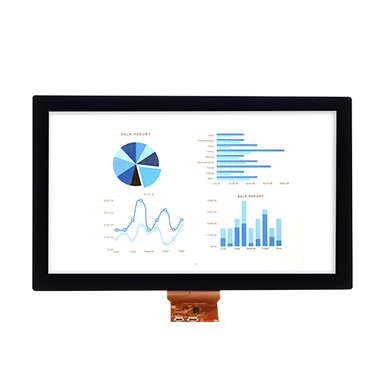
Out Line Dimension , L * W * H (mm)
244.66 * 163.3 * 1.53 mm
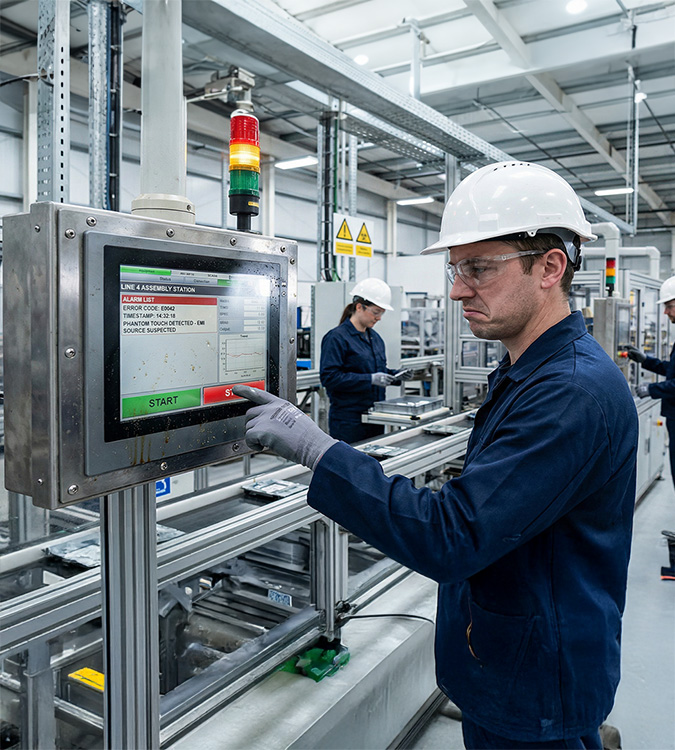
Out Line Dimension , L * W * H (mm)
444 * 264.6 * 14.73 mm
07 Jan. 2026

24 Dec. 2025

15 Oct. 2025
Contact Higgstec to learn moreInnovation Technology Applications
EXPLORE PRODUCTS
Higgstec's projected capacitive touch panels deliver smooth and stable touch performance. Additionally, with excellent electromagnetic compatibility, water resistance, sunlight readability, and other advanced specifications, they are ideal for use in various demanding environments, including industrial, rugged, medical, automotive, and marine industries.
Higgstec's 5-wire resistive touch panels offer exceptional reliability and outstanding linear performance using a unique high-temperature manufacturing process. Built on standard 5-wire resistive technology, we also provide customized touch solutions tailored to meet the specific needs of our clients. These highly specialized products are designed to fulfill the requirements of diverse application scenarios, achieving optimal performance.
Integrating 5-wire resistive and projected capacitive touch panels, Higgstec extends its commitment to product quality and technological innovation to touch display modules. To meet the diverse specifications required in various industrial control fields, we provide tailored touch solutions to help clients enhance the added value of their products.