CAPABILITY
NEWS CENTER
APPLICATIONS
SOLUTIONS
SUPPORT
TOUCHPANEL BLOG
CONTACT US
Essential Reading for Touch Display Module Design: Key Impacts of LCD and OLED Technologies on the Industry
17 Sep. 2025
Evolution of Display Technologies and Market Competition
In an era of rapid technological advancement, display technology has become a core competitive advantage for electronic devices. LCD (Liquid Crystal Display) and OLED (Organic Light-Emitting Diode), as two dominant forces, have undergone decades of innovation.
Leveraging stability and cost advantages, LCD initially dominated the TV, laptop, and mobile phone markets. It evolved from CCFL (Cold Cathode Fluorescent Lamp) backlighting to LED, enhancing brightness and energy efficiency. Mini-LED further optimizes display performance and thickness, making LCD more competitive.
OLED emerged with its self-emissive nature, high contrast, and slim design. Particularly after the maturation of AMOLED, it became the preferred choice for flagship smartphones, smartwatches, and high-end TVs, demonstrating strong potential in flexible and foldable screen applications. However, OLED's stability in low-temperature environments and the risk of burn-in (image retention) remain challenges.
The competition between these two major technologies drives industry progress and reshapes touch display module design. The differences between LCD and OLED directly impact structure, thickness, and performance, determining product appearance and market positioning. How do these differences shape design? Let's delve deeper.
The Touch Display Module is a critical component in electronic devices, requiring both display and touch functionalities. The emissive principle dictates the core design. LCD relies on a backlight unit, requiring additional modules, which increases thickness and limits flexibility. Mini-LED integration reduces light loss and enhances performance. OLED, being self-emissive, requires no backlight, enabling slim designs and supporting curved and foldable innovations.
Characteristics such as brightness, contrast, and color also impact touch performance. High brightness demands more transparent touch layers, while high contrast requires sophisticated technology to avoid interference. The choice between LCD and OLED is not just about structure; it also determines user experience and competitiveness. Now, let's break down their differences.
LCD relies on a backlight module, comprising an LED light source, light guide plate, and diffuser, which regulates light through the liquid crystal layer to form images. While providing a stable light source, this design limits touch implementation. Firstly, the backlight adds thickness, impacting the aesthetic freedom of slim devices like smartphones and tablets. Secondly, light loss occurs as the source passes through multiple layers, affecting display quality and potentially interfering with touch accuracy in high-brightness environments.
Mini-LED applications are changing the landscape. Through high-density local dimming, they deliver higher brightness and contrast, reducing optical interference and allowing LCDs to regain an advantage in high-end markets, particularly in TVs and industrial displays.
➡︎ Learn More: Optical Engineering for Sunlight-Readable Displays
OLEDs emit light directly through voltage-driven organic materials, eliminating the need for a backlight and fundamentally revolutionizing module design. Its slim and lightweight characteristics enhance portability, paving the way for curved and foldable screens. High integration allows the display and touch layers to be tightly bonded, reducing interference and improving accuracy and response speed.
OLED excels in display performance: high contrast, wide viewing angles, offering an immersive experience, especially with superior black levels and color reproduction compared to LCD. However, challenges persist: diminished low-temperature performance, image retention (burn-in) issues, and high power consumption at high brightness affecting long-term touch stability. As technology advances, OLED is overcoming these hurdles, becoming a mainstream high-end solution.
| Category | LCD | OLED |
|---|---|---|
| Technology Type | Out-Cell, On-Cell, In-Cell | On-Cell or Embedded (e.g., Y-OCTA) |
| Technical Principle | Flexible integration of touch layer: discrete, on top, or embedded within the display layer | Touch layer placed on top of encapsulation or tightly integrated, offering integrated advantages |
| Advantages |
▶Mature, diverse, low-cost ▶Suitable for mass production ▶In-Cell enhances integration |
▶Slim, low optical interference ▶High accuracy, fast response ▶Supports under-display fingerprint/flexible innovations |
| Challenges & Limitations |
▶Backlight causes optical interference ▶High brightness environments affect accuracy ▶Integration complexity varies by type |
▶High process requirements, material sensitivity ▶Image retention (burn-in) risk, high brightness power consumption impacts long-term stability |
| Solutions & Trends |
▶Optimized backlighting/transparent materials ▶In-Cell gaining traction in mid-to-high-end applications |
▶Mature technology ▶Widely used in flagship/wearable devices |
Different industries have distinct demands for LCD and OLED, highlighting their unique value propositions.
| Industry | LCD | OLED | Trend |
|---|---|---|---|
| Consumer Electronics | Mid-to-low-end phones/tablets/TVs; cost-effective, stable | High-end phones/watches/TVs; high contrast, slim | Market Segmentation |
| Industrial & Medical | Control panels/medical monitors; stable, long lifespan | High contrast, wide viewing angles, fine imagery; niche penetration | Modest penetration |
| Automotive Displays | Dashboards/central controls; reliable, low cost | High-end curved/irregular shapes; design flexibility | High-end growth, LCD persistence |
The emissive principles of LCD and OLED profoundly influence touch display module structures. LCD backlighting suits stable, cost-driven applications; OLED's self-emission offers slimness and innovative possibilities.
Looking ahead, technological convergence will bring breakthroughs. For instance, Mini-LED backlighting can retain LCD's stability while enhancing contrast and color performance. OLED's flexible advantages will drive the development of foldable devices, fostering more innovative touch module designs. However, cost and lifespan remain critical challenges: reducing OLED production costs and extending its lifespan will determine its market penetration.
As the wave of technology approaches, are you ready to lead the change? Explore the display solutions best suited for you and let's create a brilliant future together!
➡︎ Evaluating Touch Display Module Suppliers: A Practical Guide
LCD relies on a backlight unit (e.g., LED or Mini-LED), offering stability and cost-effectiveness, suitable for mid-to-low-end and industrial applications. OLED, utilizing self-emissive technology, boasts advantages such as slimness, high contrast, and curved design capabilities, making it ideal for high-end flagship devices, but it faces burn-in risks and low-temperature stability challenges.
LCD's backlight module structure adds thickness, limiting slim design flexibility; light passing through multiple layers can affect display performance. OLED's self-emissive technology eliminates the need for a backlight, enabling slim designs, supporting curved and foldable screens, and allowing for tighter integration of display and touch layers, improving response speed and accuracy.
Mini-LED technology, through high-density local dimming, delivers higher brightness and contrast, reducing optical interference. This allows LCDs to regain an advantage in high-end markets like TVs and industrial displays, while also reducing thickness.
OLED's main advantages include high contrast, wide viewing angles, slim design, and support for curved and foldable innovations. Challenges include diminished low-temperature performance, image retention (burn-in) risk, and high power consumption at high brightness affecting long-term stability. As technology advances, these issues are gradually being overcome.
LCD Stability or OLED Sleekness?
Let Us Help You Find the Answer
Consult Our Touch Display Module Solutions
01 Oct. 2025

28 Oct. 2025

12 Nov. 2025
10 Dec. 2025
04 Feb. 2026
06 May. 2026
22 Sep. 2026
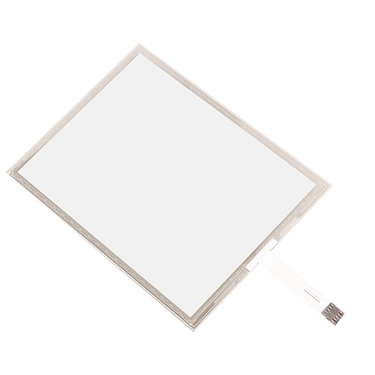
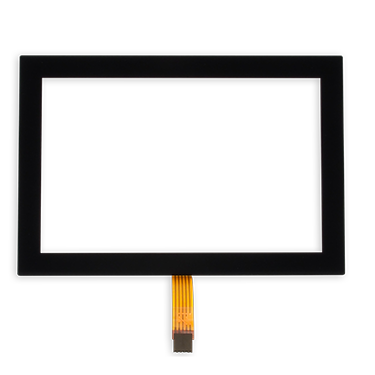
Out Line Dimension , L * W * H (mm)
375.58 * 308* 2.1 mm
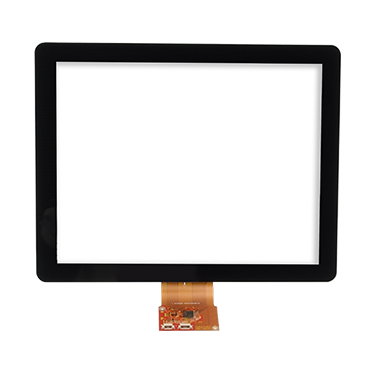
Out Line Dimension , L * W * H (mm)
375.58 * 308 * 2.23 mm
EXPLORE PRODUCTS
Higgstec's projected capacitive touch panels deliver smooth and stable touch performance. Additionally, with excellent electromagnetic compatibility, water resistance, sunlight readability, and other advanced specifications, they are ideal for use in various demanding environments, including industrial, rugged, medical, automotive, and marine industries.
Higgstec's 5-wire resistive touch panels offer exceptional reliability and outstanding linear performance using a unique high-temperature manufacturing process. Built on standard 5-wire resistive technology, we also provide customized touch solutions tailored to meet the specific needs of our clients. These highly specialized products are designed to fulfill the requirements of diverse application scenarios, achieving optimal performance.
Integrating 5-wire resistive and projected capacitive touch panels, Higgstec extends its commitment to product quality and technological innovation to touch display modules. To meet the diverse specifications required in various industrial control fields, we provide tailored touch solutions to help clients enhance the added value of their products.