CAPABILITY
NEWS CENTER
APPLICATIONS
SOLUTIONS
SUPPORT
TOUCHPANEL BLOG
CONTACT US
Initial Foray into Military Touch Panel Development: A Practical Roadmap from Requirements Definition to Mass Production
26 Nov. 2025
For most small to mid-sized device makers, system integrators, and ODM project leads, the toughest part of entering military/government tenders for the first time isn’t the technology—it’s the path from zero to one. Military standards are intricate, checkpoints are unforgiving, and the supply chain demands long-term stability—each gate feels like a wall. You may have solid products, but without a repeatable roadmap, any misstep can stretch timelines, compress margins, and even miss the market window.
That’s why choosing the right partner matters more than choosing parts. As a touch panel specialist with years of experience, we don’t just ship products—we walk the whole path with you: requirement definition, design freeze, verification strategy, ramp to mass production, long-term supply, and change control. We turn uncertainty into rhythm, risks into processes, and a one-off “hard push” into a sustainable ticket to entry. Drawing on real project experience, this article explains the three most common bottlenecks new entrants hit in the defense market, the solutions and tools, and a practical methodology to deliver end to end.
Once you’re inside, you realize a “military standard” isn’t a single document but an interwoven matrix. Centered on MIL-STD-461, you must also cover environmental items such as vibration, drop, salt spray, thermal cycling, damp heat, dust, and IP protection. Test conditions can’t conflict, and verification order must be engineered; otherwise you may discover at the end that your early direction was wrong. Teams must map functional requirements to clauses and tests from the start, while leaving wiggle room on key parameters—EMI margins, mechanical tolerances, optical stack adjustability. The verification roadmap must track the project plan so validation becomes a managed cadence, not a last-minute black box. Inexperienced teams tend to burn the most here: incomplete specs, shaky schedules, and when tests fail, they must restart—time and cost surge.
On paper, EVT/DVT/PVT are clear; in practice, they’re minefields. EVT validates feasibility and key parameters—skip pre-checks and jump straight into formal tests, and your failure rate skyrockets. DVT carries the pressure of design sign-off—small tweaks can ripple across optics, mechanics, EMC, firmware. In PVT, production conditions and stability rule: yield, fixtures, line takt time, and metrology consistency all matter. Any stuck node extends schedule and inflates cost. Without a “prep course” mindset—front-loading pre-checks, simulations, and tolerance windows—first-timers struggle to keep risks contained.
Defense projects live long lives, with far stricter traceability and change requirements than commercial markets. You’ll face EOLs and cross-region compliance; alternates require evaluation and re-qualification; custom BOMs need precise version traceability. You must also pass audits: failure analysis, 8D reports, PCN/ECN notifications—everything needs a verifiable evidence trail. Without strategies and systems established early, you’ll be reactive when changes hit—your cadence and commitments get dragged around.
Military standards system
NPI cycle control
Long-term supply management
| Barrier type | Specific challenges | Key solutions |
|---|---|---|
| Military standards system | • MIL-STD-461 interwoven matrix • Vibration/Drop/Salt spray/Thermal cycling tests • Map functional needs to regulatory requirements |
• Build a compliance matrix • Reserve design margins • Complete test roadmap |
| NPI cycle control | • EVT feasibility verification • DVT design sign-off gate • PVT production stability tests |
• Introduce pre-checks • Define failure tolerance windows • Data traceability system |
| Long-term supply management | • Part EOL and cross-region compliance • Alternate parts evaluation & re-qual • Custom BOM version control |
• Alternate part matrix • EOL risk early-warning • PCN/ECN process |
These three barriers are universal for first-time entrants to defense. Think of them as three required courses: align specs with standards; front-load verification into a system; embed long-term supply and change governance into the lifecycle. Master these, and you’ll have a practical playbook for delivery.
A European industrial equipment maker decided to step into defense, targeting touch displays for “outdoor high-interference environments.”
Clear objectives
They quickly hit three blind spots
No familiarity with the verification roadmap—no blueprint for passing MIL-STD-461, leading to back-and-forth in design planning
Lacked pre-check and measurement resources—couldn’t run critical pre-scans early, increasing late-stage rework risk
Unfamiliar with long-lifecycle supply—no alternate part matrix, unclear how to handle EOL and cross-region compliance
The result
We decomposed the problem and built the process—three core decisions pulled the project back on track.
• Co-build a product spec tree—from application scenarios and user operations down to design parameters aligned to regulatory goals
• Map each parameter to the relevant clauses, creating a compliance matrix and verification roadmap
• Reserve margins at spec stage: EMI headroom, optical stack adjustability, mechanical and sealing redundancy
• Bring in lab resources: EMI pre-scans, environmental simulation (thermal cycling, salt spray, damp heat), optical metrology, mechanical pre-validation
• In EVT, run pre-scans on critical items to establish “failure tolerance windows” and correction slots
• Build a test data traceability system (version, lot, conditions, results, conclusions) so every test has context
| Phase | Primary tasks | Key verification items | Risk control points | Deliverables |
|---|---|---|---|---|
| EVT | Design feasibility verification | • EMI pre-scan • Optical parameters • Touch performance |
• Pre-check failures • Parameter drift |
• Design verification report • Key parameter confirmation |
| DVT | Design sign-off verification | • Full military tests • Environmental endurance • Mechanical strength |
• Changes ripple effects • Test failures |
• Design freeze documents • Compliance evidence |
| PVT | Mass production stability tests | • Yield statistics • Fixture validation • Line takt time |
• Measurement consistency • Insufficient capacity |
• Mass production readiness report • SOP documents |
• Build an alternate-part matrix (primary/secondary, same-grade, down-/up-grade) to retain maneuver room for EOL
• Introduce EOL risk alerts and part life assessments, aligned with cross-region compliance
• Establish PCN/ECN processes and client communication gates to keep compliance and traceability post-change
Driven by the three decisions above, the client completed the full development flow: design freeze, verification passed, stable mass production. More importantly, they won their first batch of orders and established a foothold in defense applications.
Defense products can’t be improvised. Requirement definition, compliance mapping, and test roadmaps must be in place at kickoff. The better the plan, the fewer iterations, the shorter the cycle, the lower the risk.
Introduce pre-checks and simulations early to catch EMI, optical, mechanical, and environmental issues. Turn “late-stage rework” into “early micro-adjustments,” trading minimal cost for maximal stability.
Defense isn’t about listing a product; it’s about sustaining a long lifecycle. Alternate-part strategy, EOL alerts, version traceability, and PCN/ECN gatekeeping are fundamentals for stable delivery.
If you lack in-house defense experience, externalize the expertise. From compliance to verification, metrology to supply chain—let experienced teams be your accelerator.
Full upfront planning
Priority: 🔥🔥🔥Front-loaded verification capability
Priority: 🔥🔥🔥Long-term supply management
Priority: 🔥🔥Choosing the right expert partner
Priority: 🔥🔥🔥These lessons apply not only to defense, but also to aerospace, medical, and industrial control—different domains, same patterns, repeatable methods.
The defense market doesn’t reward one-off luck; it trusts demonstrable capability. Every test, report, and change builds long-term advantage. When you stabilize processes, barriers become your moat; when you deepen data, experience becomes your accelerator.
As your R&D and supply partner for touch panel technology, we believe reliability is competition. We don’t just hand you a product—we put methods and tools in your hands and walk the full journey with you. From requirements to design freeze, from pre-checks to stable mass production, from EOL alerts to change control, we use a repeatable, auditable, and scalable process to make the first time less daunting—and every time more robust.
If you’re standing at the threshold of the defense market, remember: the better the preparation, the more the odds favor you. Clarify specs, front-load validation, secure supply, and choose the right partner. Leave the rest to process, data, and a system that stands up to audits.
We’re ready to equip you with this methodology and toolkit. When you’re ready, let’s turn high barriers into high moats—so your products not only pass, but endure and grow.
Major challenges include the complexity of military documentation, long NPI verification cycles, and stringent requirements for long-term supply and change control. Poor handling leads to extended timelines, higher costs, and missed opportunities.
Build a compliance matrix that maps functional needs to relevant clauses, and reserve design margins (e.g., EMI headroom, mechanical tolerances). Define a complete test roadmap that aligns verification order with the project timeline to avoid rework from testing in the wrong order.
EVT (feasibility), DVT (design sign-off), and PVT (production stability). Reduce risk by introducing pre-checks early, establishing failure tolerance windows, and deploying a data traceability system so issues are corrected quickly without derailing downstream progress.
Build an alternate-part matrix, introduce EOL (end-of-life) risk alerts and part life assessments, and implement cross-region compliance strategies. Establish PCN/ECN processes to ensure compliance and supply stability after changes.
Clarify requirements and support early design: structure the product spec tree, build a compliance matrix, and define the test roadmap. Introduce lab resources early—EMI pre-scans, environmental simulations, and optical measurements—so validation becomes part of the design conversation, not a black box.
Choose partners with military compliance experience who can support the full flow—from compliance and verification to metrology and supply chain. They help build compliance matrices quickly, introduce pre-checks, and manage long-term supply risks—acting as both accelerator and stabilizer.
For more technical details and customized solutions, please contact Higgstec.
Our professional team will provide you with the most precise support and service

07 Jan. 2026

21 Jan. 2026
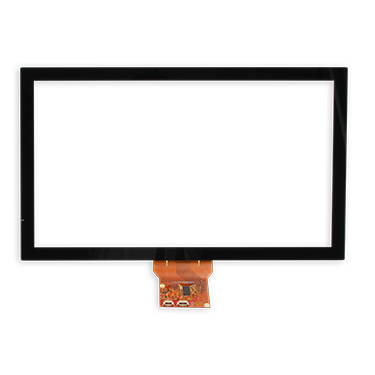
Out Line Dimension , L * W * H (mm)
376.54 * 225.9 * 2.23 mm
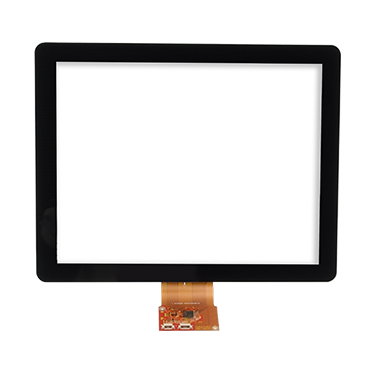
Out Line Dimension , L * W * H (mm)
375.58 * 308 * 2.23 mm
Out Line Dimension , L * W * H (mm)
444 * 264.6 * 2.23 mm
Out Line Dimension , L * W * H (mm)
511.45 * 302.92 * 3.23 mm
EXPLORE PRODUCTS
Higgstec's projected capacitive touch panels deliver smooth and stable touch performance. Additionally, with excellent electromagnetic compatibility, water resistance, sunlight readability, and other advanced specifications, they are ideal for use in various demanding environments, including industrial, rugged, medical, automotive, and marine industries.
Higgstec's 5-wire resistive touch panels offer exceptional reliability and outstanding linear performance using a unique high-temperature manufacturing process. Built on standard 5-wire resistive technology, we also provide customized touch solutions tailored to meet the specific needs of our clients. These highly specialized products are designed to fulfill the requirements of diverse application scenarios, achieving optimal performance.
Integrating 5-wire resistive and projected capacitive touch panels, Higgstec extends its commitment to product quality and technological innovation to touch display modules. To meet the diverse specifications required in various industrial control fields, we provide tailored touch solutions to help clients enhance the added value of their products.